Is anyone getting information out of the DWP at the moment?

I got a note from the DWP FOI yesterday to tell me a response to an FOI request that I sent last month about deductions from Universal Credit for tax credit debt would be delayed.

Of course – that’s happened before and not just to me. The point I making today is that I can’t get anything from the department on any front. The press office wouldn’t give me even a one line response to use about a fortnight ago for a question about private companies which do or don’t run Universal Credit contact centres (the department sent me a list I had and then I had to send another FOI. I couldn’t understand why the DWP wouldn’t just tell me who ran the contact centres).

And then there’s the fact that people’s requests for their own benefits paperwork go unanswered by the department.

Don’t like it.

“We’re cutting your benefit, but won’t say why. Get your arse to the jobcentre” – DWP to woman with serious mental health condition

Readers of this site will know I’ve written regularly about Maggie (name changed), a 41-year-old Northampton woman with a schizophrenia diagnosis.

Maggie has been sectioned in the past and has spent time in hospital.

Maggie receives the Employment and Support Allowance benefit. Up until recently, Maggie was in the ESA Support Group, which is the group for people with the highest support needs.

The DWP suddenly changed that about a month ago. Maggie was sent to a Maximus face-to-face assessment. She got a letter at the end of September which told her that her ESA claim had been downgraded. She was now in the ESA work related activity group (which means that she must attend jobcentre meetings about finding work) and her benefit money had been cut.

The DWP did not tell Maggie why it had suddenly decided she was able to look for work and live on less money. Her condition has not changed. It’s actually worsened since local mental health support services were cut. No reasons for this decision were included in the DWP’s letter.

Maggie rang the DWP to ask the department to send her a list of reasons for this decision to push her into the ESA WRAG group. The DWP said it would send her those reasons by post. That was three weeks ago. The list of reasons has not arrived. Maggie can’t properly challenge the decision to change her benefits without understanding exactly what it was about her condition that the DWP thought had changed.

However – the DWP HAS managed to send other post to Maggie in the last few weeks. The department sent her a letter which told her in no uncertain terms that she must turn up to her jobcentre for a work-related interview, or risk benefit sanctions. The DWP has no problem getting that sort of letter – ie a threatening letter – in the post. That part of the system works absolutely fine.

That letter about the work interview at the jobcentre arrived almost immediately after the letter which told Maggie that her benefit had been cut (I was actually speaking to Maggie on the phone about the first letter when the second one dropped through the door). Maggie had to attend that first work-focused interview at her jobcentre last week.

I am getting very, very sick of this. You think the sex scandals in parliament are bad. This sort of story is as bad and worse. This is cutting off support to people in great need and dropping them in it.

With one pen-stroke, David Gauke and the rest of the DWP’s geniuses cut money and support to someone who has previously been hospitalised because her mental health condition is so serious. Nobody gives a stuff about that, of course, or about the effects that such letters have on people whose are already struggling to keep things going. After cutting her money, all the DWP offered Maggie by way of “support” (ha) was a threat about attending a jobcentre meeting.

How do Gauke and his bureaucrats still get paychecks for running this intentionally disastrous system – the system that people in the greatest need in our society must use? The situation I’ve described above is exactly the sort of scenario that sets desperate and unsupported people up for suicide attempts – horrible threats, pressure and reduced money, and nobody to help (welfare support and advice in Northampton is hard to come by). It isn’t even subtle.

So much for government taking mental health seriously. Do me a favour.

I won’t be letting this one go.

Why can’t/won’t the DWP send a #UniversalCredit claimant details of tax credit debt it is deducting?

Not a trick question…

Readers of this site will know I’ve been working with a young woman in Colchester who receives Universal Credit. She is very concerned about the random amounts of money that the DWP suddenly started to deduct from her Universal Credit payments for an alleged tax credit debt.

The woman disputes the debt. She wants a chance to challenge it and to stop the deductions.

The DWP is taking over collection of tax credit debt from the HMRC for Universal Credit claimants. People are complaining that the DWP has started to deduct tax credit debt repayments without notice from their Universal Credit payments each month.

Problem is – people who want to challenge these deductions run into bureaucratic problems at every turn. It’s very hard not to feel this is intentional. It really, really is. Here’s an interview I posted yesterday with an Oldham woman who has the same tax credit debt problem.

Three weeks ago, the Colchester woman asked the DWP to send her a full statement and breakdown of her alleged tax credit debt. She wanted a statement which showed the debt and listed all repayments deducted from her benefits and tax credit claims for to date.

She’s found getting that information impossible.

On the phone, she was passed from the HMRC to the DWP to the DWP Debt Management department.

The DWP finally agreed to send her a statement history in a fortnight.

That was three weeks ago. The statement has not arrived.
This means the woman is no closer to being able to challenge the tax credit debt, or the DWP’s deductions from her Universal Credit payments.

The DWP’s bureaucratic failures and institutional indifference deny her that right. The department continues to deduct tax credit debt repayment money she can ill afford to lose from her Universal Credit payments.

She will go further into debt because of that – a point that should concern everyone. This woman just took out another Universal Credit advance payment to cover the tax credit debt deductions – having just finished paying back the Advance Payment she took out to cover payment delays when she started her Universal Credit claim (you can see that deduction in the image above).

The whole thing is absolutely hopeless. I’ll post more on it as we make further requests for statements and repayment histories. Continue reading

“I miss one bill [to] pay another.” Universal Credit and debt, debt, debt. More #foodbank interviews

I’ve posted below a transcript from another recorded interview with a Universal Credit recipient made at Oldham foodbank on 13 October.

I post this transcript to show you three things:

– The debts people on low incomes must pay (particularly debt imposed by welfare reform)

– The way the DWP deducts random repayment sums for DWP loans and tax credit debt from Universal Credit payments without telling people, or agreeing manageable amounts

– The fact that people are hit by so many debt demands from councils and the DWP that they give up on all of it. Which is entirely understandable. There’s no answer to any of this, unless a philanthropic someone suddenly hands over £5000+ to clear these debts.

K, the woman in this story (she didn’t want her name published) was paying the bedroom tax, rent arrears, credit card debt, a benefit overpayment she didn’t understand, working tax credit debt, a DWP social fund loan debt and council tax debt.

Said K:

“…I don’t know where it’s come from. I didn’t even know if could go back that far [the benefit overpayment demand K had received]…it’s 2008, or 2009, and that’s housing benefit overpayment… I came out of work last year and they told [me]… working tax credits, they’ve overpaid me by £1000. They’re taking out £50 a month and I can’t do nothing about it, yeah. They just took it out, so basically, altogether, what comes out of my money, what they took is £70 a month…”

And:

“Universal Credit – [it’s] really hard. I’ve got to miss one bill [to] pay another bill. Moving it [money] around… you always get letters through your door. It’s like – I don’t get paid every month until the 18th. I’ve got a court letter now in my pocket… I’ve got to go there [court] because I can’t pay my poll [sic] tax until the 18th of the month and they want it on the first.”

Trying to sort problems out with councils and the DWP on the phone, by email, or via Universal Credit’s famously useless online journals really can be impossible. God knows I’ve canvassed that.

It’s not at all unusual to hear people say things like, “fuck it. I can’t pay that. They can come and get me.”

So.

I’m not trying to write sob stories here. I’m trying to draw a picture of the chaos – the endless, unfathomable paperwork, the weird benefit payment totals and sudden deductions from benefits, the demands for money for new debts, or debts from days gone by. Continue reading

PIP helpline officer: You must speak to me on the phone even though you are deaf

One of the volunteers I spoke with at Oldham foodbank on Friday was keen for me to report this story:

This volunteer had recently rung the Personal Independence Payment helpline to request an application form for Andrew, a 51-year-old man who has a profound hearing impairment. Andrew was at the foodbank on Friday.

The foodbank volunteer told the woman who answered the PIP helpline that Andrew was deaf.

Nonetheless, the officer on the PIP helpline insisted that Andrew speak to her – over the phone.

Both Andrew and the volunteer were still nonplussed by this on Friday. They were wondering why an officer on a helpline for PIP – which is meant to be a disability support benefit – would demand to speak on the phone to someone who has a serious hearing impairment?

Said the volunteer:

“One of the problems that I had: when I was sending out for a PIP form for Andrew, the woman at the other end of the phone – he [Andrew] doesn’t do text speak – she was saying, “why do[n’t] you put him on the phone?

“I was outside with him. I said, “I’m supporting this man. He is profoundly deaf…”

[The officer on the helpline said] “has he got a phone?”

“[I said], “No, because he can’t hear you.””

[The officer said] “But I’ve got to go through security [with him].”

“Ultimately, she was fine, but she didn’t have the breadth of aspect… [experience] to understand.”

——————–

I wanted to post this, because it was an example of a lack of DWP and provider training for disabled people and people with support needs that I (and many others) come across far too often.

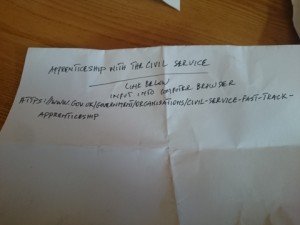
Other examples (of the many) I’ve witnessed first-hand include a man with learning and literacy difficulties who was given an impossibly long civil service url to type into a website on a computer he couldn’t use to apply for a job he’d never get. That was at Wood Green jobcentre. He and I just sat staring as his jobcentre adviser wrote the url out:

There was the Northampton man I wrote about in detail last year who was told to leave his PIP face-to-face assessment. He’d become angry and upset – he couldn’t cope with the pressure of the face-to-face assessment on account of his Asperger’s and mental health problems. No adjustments were made for him at that point. He was sent this Failure to Comply letter.

Last week, I posted a video I made of a woman with learning and literacy difficulties being told to leave Kilburn jobcentre when she attempted to drop in a sick note.

There is an extraordinary lack of expertise at times.

Redundancy, DWP debt deductions and shambolic DWP bureaucracy: more interviews from foodbanks

Image of DWP letter and envelopeOn Friday, I recorded three long interviews with people who came in to Oldham foodbank for food parcels: Andrew, 51, Annemarie, 41 (both surnames withheld for these articles) and a woman who spoke at length about her problems with Universal Credit, but did not want to give her name.

I’ve posted the transcript from the interview with Andrew below.

I’ll post the other two this week when I’ve transcribed them.


Common points in all three interviews:

All three people were having money deducted by the DWP directly from their benefits for debts they disputed. This is so common now that it is standard. People run out of money because debt deductions at source mean they never get a full benefit payment. They never get close to breaking even each month and so can never fix financial problems. The DWP deducts money from benefits for social fund loans people insist they’ve paid back, benefit overpayments people say they don’t owe, and, increasingly, tax credit debts which the DWP has inherited from the HMRC and now aggressively claws back from Universal Credit claimants without warning.

All three people had also struggled mightily to navigate the DWP’s complex bureaucracy.

You’ll see examples of both problems in Andrew’s story (the interview transcript is at the end of this post):

Andrew, 51, had a severe hearing impairment. He’d spent the last 17 years of his working life on the production line and then as a floor manager in Parks Bakery (I think he said Parks. His speech was clear in places and less so in others. He read lips well. I wrote out some words as we went along).

Andrew was made redundant about five years ago. It seemed that was when the problems took off – another common story. Redundancy marks the start of the downward spiral for many people. This is hardly surprising. You’re dreaming if you think it’ll be different for you [unless you are well off, of course]. Andrew said he began to struggle with depression and drink, as people do when the work goes and they’re older, disabled and living in an area where jobs are scarce. Returning to solvency and good times in these situations is not quite the slamdunk that welfare reformers would have you believe.

Andrew was now “living off my overdraft.”

He was a good bloke to hang out with – wry. He said that his immediate problem was getting the DWP to understand that he didn’t have the several grand in savings that the DWP kept insisting he had. He said that trying to get this across to the DWP was a challenge nobody had yet been equal to. He kept rolling his eyes as he told the story. He said that he was losing about £14 from each of his Employment and Support Allowance payments in deductions for overpayments. You’ll see in the transcript below that he talked about different figures at different points. That is common, too. People struggle to keep up with the different amounts they’re paid and the varying deductions and costs, especially if they have support needs.

“…yeah [if only]… I’ve been living on my overdraft for the past five years.” He showed me the letter the DWP had sent about the money, several months’ worth of bank statements which showed his overdraft and account-draining bank charges and a Freepost envelope for sending the bank statements to the DWP. He’d been to the jobcentre with the papers. He said the woman he saw at the jobcentre made the changes to his savings information on a computer (“I can’t use it [computers]), but that something had obviously gone wrong, because the DWP had sent this new letter.

“I’ve already been down jobcentre and they did it online and that’s not got through.”

Andrew had also experienced problems with his Personal Independence Payment application.

A foodbank volunteer stopped at our table to tell me that she’d rung the PIP helpline to arrange application forms for Andrew – and got an officer who kept insisting on speaking to Andrew on the phone even though he can’t hear.

The foodbank volunteer said:

“When I was sending out for a PIP form for Andrew, the woman at the other end of the phone – he doesn’t do text speak – she was saying, “why do[n’t] you put him on the phone?”… I said, “I’m supporting this man. He is profoundly deaf… [She said] “has he got a phone?” [I’m like] “No, because he can’t hear you.” Ultimately, she was fine, but she didn’t have the breadth of aspect… [experience] to understand.”

I’ve said it before and I’ll say it again: benefit application and management systems are atrocious. It is shocking to know that these are the systems that people in the greatest need must deal with.

Often they can’t.

Here’s the transcript. It has been edited in parts.

Andrew, 13 October 2017, Oldham foodbank:

“They [the DWP] said I had this [amount of savings] in my bank account. They been knocking me money down. They’ve been taking… they said I had this in me bank account…[Andrew showed me his bank statements and the letter the DWP had sent him]. They’re going back a long time…they’ve only [gone and] done it twice. It were doing me head in. My bank’s overdrawn. I’ve been living on my overdraft for the past five years… that’s the overdraft…

I’ll post it, yeah. I have to post it to them….I’ve already been down jobcentre and they did it online and that’s not got through.

A woman did it down there for me [made the changes to Andrew’s savings record on his benefits account at the jobcentre] because I can’t use it [computers] and I’ve already done it twice. You can’t get it down at jobcentre…[unclear]

Continue reading

Learning/literacy difficulties & can’t use online Universal Credit? “Find a friend to help,” says DWP. This is dire

Yesterday, I rang the Universal Credit helpline number (0345 600 4272) to ask about DWP support for Universal Credit claimants who have learning and literacy difficulties, and who struggle to use computers. (I’ve posted a transcript of a recording I made of the call at the end of this article).

This is crucial.

Universal Credit is an online system which claimants must manage online. There is a charged-for helpline which people can call if they get stuck. The charges for this are controversial. People who have no money can’t afford the calls.

Readers of this site will know I’ve spent much time with benefit claimants who have learning and literacy difficulties and/or can’t use computers. I’ve taken videos which show people struggling to even switch a computer on. Even before Universal Credit, these people were in no position to carry out online jobsearch activities.

The advice I was given over the phone yesterday for people in these situations was utterly unacceptable. It showed the DWP has absolutely no concept of the challenges and isolation people in these situations experience.

The officer even said that one option that the DWP is supposed to offer to people with support needs – making a Universal Credit application over the phone – should be seen as a “last resort,” was “not ideal” and that there were potential security problems with it. You’ll see that in the transcript.

I called because I know a man with learning and literacy difficulties who may be rehoused from London to Manchester at some stage (I’ve written many stories about this man’s jobcentre access difficulties in the past three years). I wanted to know about the DWP support he’d receive if he needed to apply for and manage an online Universal Credit account. I also wanted that information generally.

As I say, the DWP’s advice on the phone was unacceptable. I’ve listed reasons why below.

The DWP told me that people with access issues had three options. In my view, there were major problems with all of them. Remember – this is the advice people are given when they ring Universal Credit over the phone. This is not a finessed statement from a press office.

The DWP said:

1) The best option for people with learning and literacy difficulties was to find a friend or family member who could make and manage a Universal Credit application.

This was extraordinary. Readers of this site will know I’ve interviewed people who literally have nobody to provide that sort of support. I’ve made benefit and reclaim applications, discretionary housing payment applications and written benefit appeal letters for people because of it. Family members also struggle with the Universal Credit system, just by the way.

2) The DWP could help people make and manage an application over the phone – BUT the officer said this option was a “last resort” and “not ideal” because there was no special system in place for it.

He said Universal Credit officers just created an account as though they were the applicant and had access to usernames and passwords.

He also seemed to say there were potential security issues around that, because: “obviously, that data [usernames and passwords] is out there and we’ve got that as well as the claimant.”

3) People could contact Citizens Advice for help.

This was extraordinary too. When you go to the Citizens’ Advice website, you’re told to contact Universal Credit if you have access problems.Getting help from the CAB can be very difficult generally, because they’re so oversubscribed. I’ve queued at CAB offices with people to make appointments, only to be told by 9am that all appointments for the day had gone. People actually get angry now when you suggest they contact their local CAB, because they’ve already tried and failed.

I also note that the CAB site says people can make an application to the DWP in person. This wasn’t offered as an option in my phone call yesterday.

Continue reading

Video: Learning and literacy difficulties and need to drop a sick note to the jobcentre? Too bad. You’re banned. Get out

Here’s one you should see: a recent* video which shows a woman with learning and literacy difficulties being told to Get Out of Kilburn jobcentre – even though she needed to drop off an all-important sick note at the jobcentre.

I post this to show you how unpleasant things can be at these places for long-term unemployed people who have support needs. People in these situations really are at the bottom of the pile. They have no power and absolutely no means of challenging the DWP.

I hate that.

The woman, Linda (name changed. I’ve written about her many times) is in her 50s. The day I took the video, Linda, as I say, needed the jobcentre to accept a sick note she had from her doctor. She risked sanctions if the jobcentre did not accept the note.

Nonetheless, the jobcentre adviser we saw refused to take the sick note.

That was because Linda was serving a ban from Kilburn jobcentre for losing her temper through sheer frustration and upset. Aggressive outbursts from people in Linda’s situation are inevitable.

We’ll get to that.

The story:

Linda has signed on at Kilburn jobcentre for years. They know her well there – probably too well, in the sense that familiarity in these places can breed contempt. Linda’s a permanent fixture. She’s a target for the DWP’s institutional contempt because of that. I’ve seen people act as though she’s annoyingly underfoot. Like a lot of older, long-term unemployed people with learning difficulties and deteriorating health (Linda’s had blood clots and deep vein thrombosis, and can’t walk far) Linda is very unlikely to find work. She’s stuck in the benefits system at a time when contempt for people who rely on that system is rife.

She is perfectly aware of that contempt. She responds in kind.

Which leads us to the ban.

Earlier this year, Linda was banned from the jobcentre for losing her temper and and raging at staff. I’ve spoken to an eyewitness. Linda was out of control and screamed the place down. Apparently, this started when a security guard said something to her. Continue reading

Universal credit and tax credit debt collection… wtf is going on here. My god

Updates at the end of this post

Let’s finish the week as we started it – ie trying to make sense of the Universal Credit “system”:

I just finished speaking to the young Universal Credit claimant I wrote about earlier in the week. Readers of this site will be familiar with this woman’s story. This woman must carry out her Universal Credit compliance activities through Croydon jobcentre even though she lives in Colchester. She’s also been having £100+ deducted from her Universal Credit payments each month to repay a Universal Credit advance payment – the advance payments that David Gauke assures us will help people avoid (don’t laugh) the debts caused by delays in Universal Credit payments.

Now, the DWP has landed another debt on this young woman. This is a tax credit debt that she is sure she does not owe. The DWP has suddenly (this week) started deducting £25 a month from this woman’s Universal Credit payments. That’s another £25 gone each month from this woman’s money. She didn’t expect this deduction (at all) and she hasn’t budgeted for it. You see what I mean when I say that the state keeps broadsiding people with debts they can’t pay.

To cut a long story short:

This woman was among the many affected by the Concentrix tax credit scandal last year. The HMRC claimed she was living with someone (she wasn’t – like many caught up in the Concentrix debacle, she’d never even heard of the person she was accused of living with).

To start, the HMRC told her she owed a couple of thousand pounds in tax credit overpayments. Fighting that took months and endless phone calls which often required her to spend literally ages on hold. The amounts that the HMRC said this woman owed changed all over the place. Deductions were made from her benefit payments. This went on for an absolute age. I remember it well. The stress it all caused was extreme.

Earlier this year, this woman was told that she now owed about £1382 in child tax credit overpayments. She says nobody could tell her why. Then, the deductions for these so-called “overpayments” from her benefits stopped for a couple of months. She thought that meant the HMRC had decided she was right to say she owed nothing. Last month, no overpayment deductions were taken from her Universal Credit payment. There was relief all round. That really did seem to be the end of that.

Then last night, the woman looked at her Universal Credit account – and saw a message saying that £25 would be taken out for tax credit overpayments. She had absolutely no idea where that figure came from and/or why the message suddenly turned up. As I say, she wasn’t expecting it and certainly hadn’t budgeted for it. That money must now come from money set aside for other bills. This is why people fall into rent arrears, just by the way. People literally have no idea how much money they’ll get from month to month. Surprise deductions are made from their Universal Credit payments and people are not prepared. They have to try and find the shortfall at extremely short notice.

The woman says that trying to get to the bottom of things on the phone today has been an absolute nightmare and then some. The HMRC couldn’t “help” any more. Her (supposed) tax credit debt apparently now belongs to the DWP, because she is a Universal Credit claimant. Tax credits and debt apparently now come under the auspices of the DWP for some UC claimants (be afraid of that. These people literally couldn’t find their own arses with a searchlight. How they will manage the intensely complex tax credits and tax credit debt system – which was already a shambles – I do not know).

Or maybe I do. The woman says she called the Universal Credit helpline. They told her to talk to the DWP’s debt management department. Debt management said that she owed over £80 in tax credit overpayments. She asked how that could be. Other figures were bandied about. She said the numbers and figures didn’t add up. Debt management told her to call the tax credits helpline number. She called the tax credits helpline number. Tax credits told her to call Universal Credit..I just called the Universal Credit helpline to ask how all this should work. They told me to ring the DWP’s debt management line…

You get the picture.

More soon. I’m going for a drink.


Updates 8 October

  • The woman in this post says that after a lot of debate, DWP debt management agreed to send her a breakdown of the tax credit overpayment amount she supposedly owes. She must wait a fortnight for that statement to arrive. The DWP confirmed that it was managing tax credit debt when I rang on Friday.
  • Apparently, the HMRC should send people a letter called ‘Your tax credits overpayment’ (TC1131) if their tax credits debt is transferred to the DWP. Has anyone actually received on of these?
  • People have left comments on facebook to say that they’ve also had tax credit debt repayments deducted from their Universal Credit payments – between £40 and £60 per payment. Deductions stop and then start again.

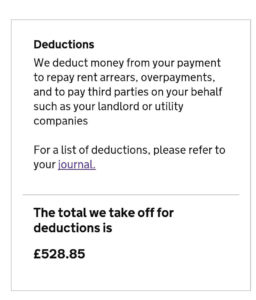
The woman in this post says she takes screenshots of her Universal Credit account most days, because she doesn’t trust information in it not to change. Several months ago, she received a message in her Universal Credit account to say that £528 would be deducted from her Universal Credit account for overpayments. That notice frightened her. She couldn’t understand where the £528 amount had come from and she sure as hell couldn’t afford to lose £528 that month.

Here’s that notice:

This is a shambles.

So, Gauke – what about the many people who need Universal Credit, but can’t use computers or online systems at all?

While we’re on the subject of Universal Credit:

Readers of this site will know I’ve regularly uploaded stories about people with learning and literacy difficulties, and other access issues, who are not able to use computers. It’s an issue noted by many. I’m working on another example of such a situation for a Universal Credit applicant at the moment.

The fact is that people in these situations will be utterly excluded from Universal Credit without support to apply and to manage their accounts.

Support is difficult to find – and can be almost impossible to find in some parts of the country (I know this, because I’ve tried). Planned jobcentre closures around the country will exclude people with access issues even further.

Perhaps Mr Gauke can expand on his plans there.