We know you’re homeless and dangerously depressed and anxious. Let’s push you over the edge

Readers of this site will know that I’ve been interviewing homeless Newham woman Marsha, 30, this year.

Marsha is living in temporary accommodation in a one-room hostel with her little daughter. The two have lived in this cramped space together more than two years.

Marsha has severe depression and anxiety. She sometimes cries when we talk. She is stuck in dreadful poverty in a way that she fears is permanent: “They [Newham Council] will put me in housing (out of London, away from jobs, training and free childcare with family) and I will be on benefits for the rest of my life.”

Marsha gets no respite from a public sector that should be in place to help. Marsha is being crushed by that sector. The public sector has no resources and no patience, imagination, or humanity as a result. That’s austerity.

On her own, Marsha can’t get housing in Newham near family who could look after her daughter while Marsha studies to qualify for the jobs that will get her off Universal Credit.

Marsha relies completely on her mother to look after her daughter and for much-needed emotional support. If Marsha is housed miles away from her mother as the council has historically insisted she must be, she’ll be isolated on benefits and in debilitating depression forever. The facts are also that job and training opportunities are much better in London than they are in the places that councils suggest people live.

This is why homeless families fight so hard to stay in the city. It’s not because homeless families can’t stand the thought of living in towns that don’t have a Harrods. It’s because employment and training opportunities in smaller towns can be hard to come by.

People also worry about racism in other towns, just by the way. We live in febrile times on that score.

Meanwhile – social services and her daughter’s school are constantly on Marsha’s case in a threatening way. They demand that Marsha and her daughter attend same-day meetings to discuss her daughter’s mental and emotional health – health that is inevitably deteriorating because of the conditions that Marsha and her daughter are kept in. Like so many people I speak with, Marsha worries that the mental and emotional health problems that are caused by the family’s living conditions will lead to her daughter being removed.

Meanwhile again, Marsha’s jobcentre adviser has sanctioned Marsha for attending college – rather than sending off the hundreds of never-answered applications for minimum-wage jobs that the DWP demands.

I talk to too many women with children who are held in poverty in this three-way clamp housing, social services and DWP all keeping single mothers in their place.

On the housing front:

I think that Newham council is stringing Marsha along when it comes to promises of better (ie fit for human habitation) housing. Such promises are as cruel and dangerous as they are empty – particularly when you are dealing with people who live in hellholes and have very serious depression.

A couple of months ago, officers showed Marsha a pigsty in Woolwich and told her to live in it, or else (the “or else” being that the council would give Marsha no more “help” if she didn’t shut up and take the flat).

Later on, under pressure, the council apologised to Marsha for treating her in this way.

Councillors said that they would find Marsha and her daughter a better home – ie, something human beings could just about live in. They even said they’d located such place.

That was months ago. Absolutely nothing happened after that. You started to wonder if this better home existed at all.

The council told Marsha that she couldn’t move in, because it was fixing the flat. I can’t imagine what sort of fixing this has involved. It’s been months.

And maybe Marsha was right to wonder if this promised flat was real. Certainly, the promise of it wasn’t. Marsha just told me that the council has rung to say that the flat is off the menu. The council says it has another flat in mind. Marsha was crying when she said that she doubted this. She said she was thinking of giving up – of leaving the homelessness hostel and bunking down wherever she could. This – from someone with very bad depression and anxiety.

You can see why homeless families in Marsha’s situation beg councils for social housing and secure tenancies. It’s not just that private tenancies are notoriously expensive and insecure, and that you’re likely to be facing eviction and homelessness again in a matter of months. It’s that councils can’t keep a grip when they’re farming people out to these places.

I could go on and I will in another post. I have more to post on the non-stop interference that Marsha and women in her situation get from social services.

For now though – Newham council needs to sort this out. Destabilising people with depression in this way is disgusting and dangerous. I’d ask Newham council for comment on this, except that I’ve been blacklisted. I will still ask councillors directly, though. The hell with it.

Homelessness and poverty while Brexit takes it all

Posted below are excerpts from a transcript of an interview with homeless Newham woman Marsha, 30.

I post this as an example of homelessness as so many women I interview these days experience it.

Marsha talks about common problems that homeless women with children are always up against now: the lifetime of housing insecurity, the debilitating anxiety and depression, and the public authorities that invade a homeless woman’s privacy and keep her in her place by never letting her forget that they could take her child.

Marsha talks about being trapped forever – in rotten housing and low-paid work.

Few people on the ground believe that this will change soon.

The political and media classes are completely consumed by Brexit.

There’s no time or space for people who rely on the public services that our imploding politics can’t provide.

That is disgusting. I can’t tell you how upsetting it is for everyone involved.

——-

Housing

For 18 months, Marsha has lived with her 6-year-old daughter in a single room in a Newham homelessness hostel.

The two share a bed in that room:

Marsha and her daughter in their one-room temporary homelessness hostel accommodation

Before they were placed in this hostel, Marsha and her daughter lived in temporary shared accommodation in a Newham hostel called Belgrave Court.

The two had one room. They shared a kitchen and bathroom with other hostel residents.

Marsha has lived in a lot of places like this. She grew up in shared accommodation.

Marsha’s mother migrated to England from Jamaica. She worked long hours as a cleaner. She brought Marsha to England when Marsha was 12. The two lived in shared housing.

They often had to move. Stability is a privilege that not everyone enjoys.

Marsha says:

“…when you’re renting a room… you’re sharing with all different people and there’s always issues, so we’ve always had to just kept to kept on moving, so as a teenager coming up into my adult years, I had to move…”

Marsha says that she was abused when she was younger.

She hates talking about these issues (“I don’t want all my business out there”), although council and jobcentre officers insist that she talks – again and again and again:

“The medical assessment officer, he asked if I had any issues. My issues growing up is not something I’m comfortable talking about, so I just said to him, “bottom line, I suffer from depression. I don’t need to go into the things that make me depressed, because it is uncomfortable to relive certain moments…”

Relentless interrogation by authorities

Marsha is forced to relive her past and present problems, though. Homeless women must repeatedly justify their need for housing and income help to strangers by explaining their backgrounds and experiences again and again. They must tell their stories from the start to each new officer who interviews them – council homelessness officers, MASH (multi-agency safeguarding hub) officers, jobcentre advisers and social workers.

They must tell officers everything: mental health histories, family histories, relationship histories and abuse histories. There’s no letup. There’s no privacy. There is no autonomy. Officers want details when they are deciding if a homeless woman is in need.

They want graphic details, even. Does the woman have panic attacks? How often does she have them? How serious are they? How bad is her depression? Is she medicated? Was she abused? Who was her abuser? What did her abuser do? How has her experience affected her kids?

Officers want to rate a woman’s story. They want her to prove that her problems are genuinely serious, whatever that means.

Marsha says that her medical history of depression and panic attacks (she’s been hospitalised in the past) has sometimes been dismissed in the past, because officers say that panic attacks are run-of-the-mill these days:

“They said to me panic attacks is a common thing, [that] lots of people go through it. [They said] “just find coping mechanisms and you will be all right.”

Officers say that even when Marsha is clearly unwell:

“…the sort of depression that I had at the time – I was always washing my hands. I was always doing stuff. I couldn’t take light. Even now, I can barely stand light. That’s why I put stuff over the window.”

Marsha still drapes sheets and blankets over windows to keep the light out. I visited her at about midday on a Saturday and her hostel room was in shade.

Sheets and blankets draped over the hostel window

Officers know these things, but ask about them repeatedly all the same.

Councils keep detailed files about homeless people, but don’t refer to them, apparently.

Marsha says:

“I said to him [the officer], “I’ve got my housing file in my drawer. It’s this thick. I have been complaining since I moved into this property that I have panic attacks at least two to three times a week.”

At a recent meeting with social services, Marsha had to remind the social worker of her name, because the officer wasn’t sure who Marsha was – even though she had called Marsha to the meeting.

The social worker hadn’t looked at Marsha’s file. She just brought Marsha in to question her.

———- Continue reading

Get to the office today or we’ll throw you off the homelessness list: how people with mental health issues are addressed

Update 28 Feb: the council says that it is investigating this situation – to find out how someone living in one of its homelessness hostels came to receive such a letter.

————————–

Original post:

Seriously.

I wrote a fortnight ago about Lukia, a woman with serious mental health difficulties who lives (if “lives” is the word) in a Newham homelessness hostel.

Lukia has previously been in the care of a mental health unit.

She is battling Newham council for permanent housing.

Lukia came home last week to find this note under her door:

The note says:

“You are request [sic] to come into the office in Victoria Street today by 3pm. Failure to do so will lead to you being removed from the homelessness list and you will be asked to leave your home.”

I post this to show you again the way that people with no clout are addressed by authorities.

Every contact is a threat.

People aren’t invited to meetings with council or hostel staff. They’re told to attend, or else.

The “or else” part can be the threat of being thrown off the homelessness list and out of a hostel room, as in this case.

It can be the threat of street homelessness and child removal. Whatever form the “or else” takes, these threats are heavy-handed, dangerous and unjustified.

It’s high time that councillors and MPs addressed this. A shortage of housing does not justify a shortage of decency and care.

Lukia, as I’ve written, has a history of serious mental health difficulties and of being placed in temporary accommodation so vile and substandard that she’s been moved out of it.

She feels that permanent accommodation is her only chance at the stability that might lead to an improvement in her health.

Threats of homelessness hardly help people achieve that.

Do councils actually try to drive homeless mothers to breakdown so they can remove their kids?

I am starting to wonder.

Readers of this site will know I’ve been interviewing Marsha, a homeless 30-year-old Newham woman.

Marsha is living in a homelessness hostel in Newham – in a one-room hellhole which she shares with her six-year-old daughter.

I reported this week that Marsha had written to the council to ask when she and her daughter would be placed in longer-term housing in Newham.

The two have been living in that stifling hostel room together for over a year.

Marsha is desperate for a place in Newham. She is at college. Her daughter is in school. Marsha relies on family for childcare and mental health support. Her mental health is deteriorating, because of her housing problems.

Marsha is being bullied by the council.

Like so many homeless mothers I and others speak with, Marsha fears that children’s services will remove her daughter if she pushes her case.

Certainly, social services have Marsha in their sights. When Marsha wrote to the council about her housing last week, she was suddenly dragged to two meetings with social services. She and her daughter – who is only six – were grilled about their health and wellbeing.

Now, there’s more.

After that story appeared and I emailed the mayor, Marsha got a call from housing options yesterday.

She was told that the council had one private-rented flat in Woolwich that she had to look at and accept. She was told that if she didn’t accept the flat, she’d be out on the streets. End of story.

That’s the way homeless people are spoken to.

Oven at the flat Marsha was shown

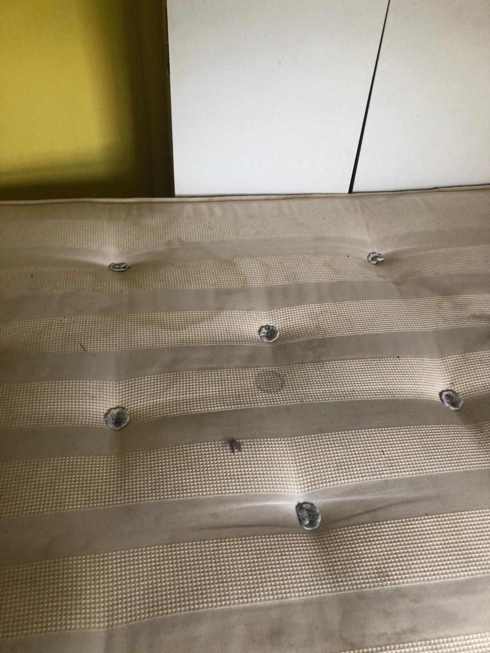
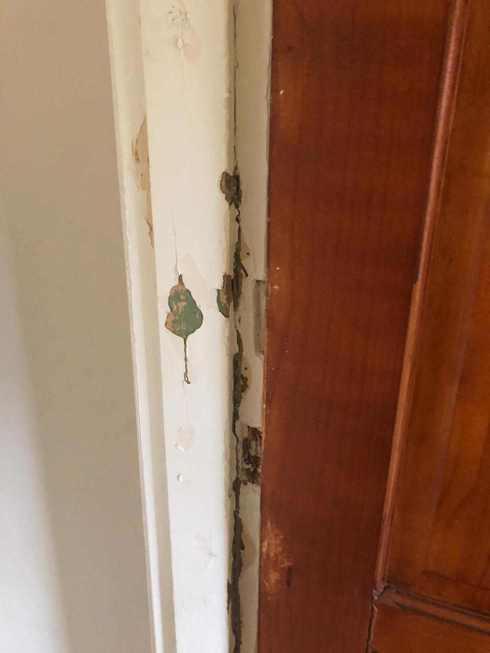
The flat was disgusting – cracked walls, filthy oven, broken locks, stained and squalid mattresses and grimy sinks and walls. I’ve posted photos through this article.

The agent who show Marsha the place said that he wouldn’t house his family members in it.

Homeless women, of course, are expected to be grateful for such places.

Mattress and bed in the flat Marsha was shown

Marsha called me in a terrible state. She has a choice: she can take her six-year-old child to live in this pigsty, or she can live on the side of the road. That’s not much of a choice in my book.

Marsha has become more and more distressed as this has gone on.

The bullying, the threats from and of social services and the upset and rotten housing that she must expose her child to are taking an obvious toll.

I’ve asked the mayor for a response to this. This is council aggression and bullying, pure and simple. The mayor better come back to me soon.

Broken walls and doors in the flat

I’ll tell you this – homeless women I’m speaking with say that they are inevitably treated like this – “do what you’re told and live in whatever hovel we send you to, and be grateful.”

It’s bad enough to know that your mental health is deteriorating because of this and because your kids are exposed to filthy living conditions and your distress.

It’s very bad to know that social services is watching you as that happens.

Continue reading

Homeless mothers: we feel the ever-present threat of social services and losing our kids. That’s how they keep people quiet

Readers of this site will know that I’ve recently been interviewing Marsha, a homeless 30-year-old Newham woman who lives with her six-year-old daughter in a single room in a Newham homelessness hostel.

The two have been stuck in this temporary accommodation for over a year.

Marsha and her daughter in their one-room temporary homelessness hostel accommodation

In the last article, Marsha talked about a concern that many homeless mothers raise. Mothers worry that council social services will try to remove their children because they are homeless. Doesn’t matter what the council can, or can’t, actually do. The threat hangs in the air and that is enough. I’ve written about this before.

In that recent article, Marsha said that Newham social services said they could take her daughter and place the child in care while Marsha “sorted herself out”:

“Social services is telling me – “oh, we can provide a home for your daughter, but not for you.”

“So I am scared.”

There’s been more since then.

On Tuesday morning, Marsha sent an email to her housing officer (Marsha copied me in). She asked for an update on her housing situation and whether she and her child could be moved to a better place than the awful hostel that they’re stuck in.

Marsha is in the dreadful limbo that so many women in poverty are.

She’s facing eviction from the homelessness hostel she’s in.

She’s studying at a local college to try and improve her chances of work and better-paid work.

She doesn’t want to have to move to a flat miles away in Tilbury (which is where the council wants her to go), because Marsha relies on her mother for mental health support and childcare while she studies. If Marsha loses that support, she’ll sink.

Marsha has no-one else to help with childcare while she studies. The jobcentre certainly won’t. Her adviser already threatened to sanction her Universal Credit for spending some of her time studying rather than all of her time looking for work.

So, Marsha sent that email to the council asking about her application for better housing. There’d been earlier emails, too, as well as the stories posted here.

Enter social services.

The next thing Marsha knew was that social services was all over her – and asking questions about her daughter’s health and wellbeing.

Marsha said she felt extremely threatened by this. A woman asks a council questions about her housing application – and suddenly, social services is on the phone demanding meetings and firing off all sorts of questions about the woman and her child’s welfare.

You have to wonder.

Marsha says that first, she was contacted by someone from the local multi-agency safeguarding hub – one of the hubs set up to track children who could be “vulnerable”:

“I literally had to explain myself and my housing situation all over again. He [the MASH officer] was really like getting a bit personal… asking me questions about my doctor, my daughter, my wellbeing, [the] school that she [my daughter] attends, her attendance… just a lot of personal stuff…”

So, there was that.

Then on Thursday last week, Marsha got a call from Newham children’s services, demanding that she attend an appointment with them that very afternoon:

“Another lady called from the social services…she said to me that she’s been given instructions from her manager to call me to arrange a meeting with herself.

I said, “what is it in regards to, because I just spoke to somebody else in the department within the social services and they are saying something different to me…”

“[She said] that she has to do an assessment with me and my daughter to do with my housing issues, and I have to come and see her and I should bring my daughter…

“I said to her – “I’m in college until 4.15pm. Then, I have to pick up my daughter.”

“She was like, “this is important and you have to come and see me. You kind of just have to find time, basically.”

“So I said to her, “okay, well, I’ll grab my daughter from school early and I’ll come and see you.”

“I was really uncomfortable…”

At the meeting, the social worker questioned Marsha and her daughter about Marsha and the child’s wellbeing:

“It is… the stuff they were asking me, Kate, had nothing to do with my housing situation. They were asking my daughter if she sleeps well, how does she play, who helps her with her homework… It’s not relevant.

“It’s almost like I’m being investigated… do you know what I mean… everyone knows that my issues is strictly around housing. I feel so uncomfortable.”

“I feel like the council is just trying to use tactics to force me into a situation…I feel like I’m being punished. I’m trying to get my voice heard and I’m speaking to people and I’m raising issues. I feel like it’s a tactical to make me go away – like they are thinking, “let’s get social services to call around.”

Marsha said the social worker told her that Marsha and her daughter would soon be evicted from their temporary accommodation. Marsha and her young daughter are facing street homelessness.

That was the first Marsha had heard about her impending eviction.

She said that the social worker was shocked to hear that the council’s housing team hadn’t told Marsha that eviction was nearing.

The bed Marsha shares with her daughter

——-

You see my point.

I talk to too many homeless mothers now who say they feel ever-threatened by social services.

They don’t know if councils can take their kids, but Can or Can’t is beside the point. The point is that the spectre of social services is raised at the drop of a hat. An implied threat is plenty good enough to shut homeless people up.

People worry about challenging a council offer of housing, or complaining about the dreadful state of temporary housing, or drawing attention to themselves by asking a council any questions about housing at all. I wonder how many homeless people are disenfranchised – bullied into silence – in this way.

Said Marsha:

“It’s the normal thing that I’ve been experiencing with council, with social services – bullying, threatening, saying that you have to do this now and you don’t have an option…she [the social worker] sat down yesterday and she said, “as you know there is no affordable housing, affordable properties [in Newham]… it’s just been like 18 months of ongoing like turmoil with them.”

Indeed.

I have more on this which I will publish this week.

The Newham council press office has blacklisted me and so won’t give a comment, but too bad for them. I’ll be emailing the mayor and the head of housing with this article and asking the council what the hell it is doing.

This is sick.

DWP: we don’t want you studying or improving your life. We want you in low paid work forever

On Saturday, I interviewed Marsha, 30.

Marsha is homeless and lives with her young daughter in one room in a temporary accommodation hostel in Newham. (I’ll publish her full story soon).

Marsha signs on for Universal Credit at Stratford jobcentre.

Marsha told me that she wants to study to become a nurse.

To get things underway, she recently signed up to study a module in health.

Marsha said that she thought her jobcentre adviser would be pleased with this initiative.

He was not. He was furious about it.

The jobcentre adviser told Marsha off for prioritising study ahead of jobsearch. She was threatened with sanctions for putting study ahead of her jobsearch activities.

Her jobcentre adviser told Marsha that finding work – any work at any pay – had to be her priority.

Study and increasing her chances of better-paid work were not DWP priorities for her.

“He said to me “they [the DWP] want you looking for work.”

I said to him: “how can I get a better job with more money to look after my daughter if I never get qualifications?”

Precisely.

Two things:

  • this is an excellent way for the DWP to make sure that people in Marsha’s situation never get out of such situations – that they’re kept in low paid, unskilled work and subject to Universal Credit conditions forever
  • it’s extraordinary that instead of encouraging her to study, the DWP would rather that Marsha spend her time on useless jobsearch exercises such as sitting in front of a computer applying online for hundreds of jobs that she’ll never hear about again. There is no greater waste of time for people than this – sending of hundreds of online job applications that are never responded to. Still, people are forced to do this in exchange for their benefits. I’ve written about this a lot.

This government is not interested in helping people achieve economic independence.

This government wants to make very sure that people who have nothing are kept in their place forever – desperate, stuck permanently in low-paid work and trapped by the state on Universal Credit, because they never earn enough to get clear.

#UniversalCredit, sanctions, rent arrears, radiation therapy, 8 people living in one small flat…what the hell does this achieve?

When will modern society work out that hating and bullying people in poverty doesn’t eradicate poverty?

Last Wednesday, I spent several hours at Oldham foodbank, speaking with people who’d come in for food parcels. I visit Oldham foodbank from time to time.

On Wednesday, I had a long talk with Mel (name changed), 47. There’s a full transcript from that interview at the end of this article.

I’m posting this interview for a specific reason.

Mel and her family were on the receiving end of a great deal of government and public bile.

I want to show you how that looks from Mel’s side of the fence:

Mel talked about being patronised by frontline officers and targeted by people in the neighbourhood.

Universal Credit officers dismissed Mel when she rang the helpline because her benefits weren’t paid: “He [the DWP officer] said, “there’s thousands like you. You’re not the only one.”

A neighbour had dobbed Mel in with authorities – I think for housing extra family members in her flat.

A secretary at a local school had called Mel’s children and grandchildren dirty: “I didn’t actually punch her…I’m not a violent person but…yeah.”

The list went on. It usually does.

That’s the point I want to focus on here.

I know precisely what government and a judgmental electorate would say about Mel’s family. They would call Mel and her family scroungers. They would hate on the family and think – “Job Done. That’ll Learn Them.” (It’s only a pity that bailed-out bankers aren’t punished as thoroughly for their money-handling problems). Such is our era. The general view is that all that people in Mel’s situation need to sort things out is a kick in the head.

I don’t believe that bashing people when they’re already down is a brilliant social policy tactic. What I do know is that Mel and her family were being crushed by the dysfunctional and abusive public sector bureaucracies that they relied on. That part was absolutely not Mel’s fault. That part was society’s fault. Society approves of institutional aggression towards the worst off and likes to describe people in poverty as barbaric if they respond badly to that aggression. That’s how things roll for the Mels of the modern world.

Let’s start at the beginning.

Mel was ill. She said that she was having radiation therapy. She looked sick. She was tiny and gaunt, and her hair was thinning. She kept saying that she looked old. She was upset about it.

“I’ve got two weeks left of radiation… two weeks left of treatment, three times a week. I look old.”

There were other problems, too – like Mel needed them.

One problem was that Mel was receiving Universal Credit. Universal Credit’s defective payment systems had caused Mel no end of grief. For example: Mel had rent arrears. She couldn’t understand why, because the housing costs component of her Universal Credit was paid straight to her landlord. Her rent should have been covered. It hadn’t been at one point or another, and she didn’t know why. Mel kept getting letters from First Choice Homes about the arrears. She couldn’t repay the money. She would never be able to repay the money. The demand letters kept coming. This happens too often to mention. The threats roll in and roll in. There’s no respite. The debts never end.

So, there was that.

Another problem was that Mel’s flat was overcrowded. Her children and grandchildren were staying with her, because they had nowhere else to go.

Mel said she had seven (sometimes eight) people living in her two-bedroom flat. There was Mel, her five-year-old daughter, her 26-year-old daughter, the daughter’s partner and their three kids (and sometimes another daughter, I think Mel said). The 26-year-old daughter and her family had recently been evicted from their flat, because the landlord had wanted to sell.

There was more.

At the moment, the family relied on Mel’s benefit money to pay for food and clothes. Mel’s daughter had applied for Universal Credit, but had only received one payment in ten months. Continue reading

Worried about being moved to the same borough as your violent ex-partner’s family? Tough. Get going.

Here’s a paragraph from a council letter which dismisses a homeless woman’s concerns about being moved to the same borough as members of her violent ex-partner’s family.

You need to see this. It is a common example of the sort of thing that homeless households are told when they challenge a council decision to send them out of borough:

The letter from the council officer says:

“You advised me that your ex partner who you fled whilst residing at [word removed] due to domestic violence. His [word removed] lives in [word removed], but you could not provide me with details such as address or full name but you were confident that [word removed] lives in [word removed]. I looked at your previous notes on file, your housing officer at that time made enquiries with the police, police confirmed that they did not state that you were not safe in the borough of…. were [sic] you fled from, neither did they exclude [word removed] as a risk area and your last reported incident was July 2016…Based on all the information this would suggest that the incidents are historic…”

Really.

I’m seeing more and more letters where every single one of a homeless family’s reasons for wanting to stay in the area that they know are dismissed out of hand by their council.

People tell their council that they want to stay in their borough for their children’s schools, for important health services, for local networks they rely on, and even for safety. They’re entitled to ask their councils to consider these circumstances when councils are looking at where to house them.

Unfortunately, none of the points that homeless families raise seem to rate. People are perfectly entitled to ask a council to review its choice of home for them, but they might as well not bother. I get the distinct feeling that decisions to send homeless people away are made before people even walk through a council’s doors.

So.

The recipient of this letter, Christine (named changed), is a young homeless Newham mother.

Christine and her children live in a single room temporary accommodation flat. They’ve been there for a year. Christine says Newham council told Christine that the accommodation would be short term. She and the kids are still there – all living in one tiny room together.

In its letter, Newham council says that Christine’s only option for longer-term housing is a privately rented flat in another borough (I’m withholding the name of the borough, because of Christine’s safety concerns).

Christine says the council has told her that she risks making herself intentionally homeless if she refuses to go.

But Christine has good reasons for not wanting to go.

As we’ve seen, one of those good reasons is that Christine doesn’t want to move to the area that the council proposes because a member of her violent ex-partner’s family lives there.

Christine’s problem is that she has not been able to prove that easily. Christine says she isn’t even sure where to start.

This problem comes up time and time again when homeless people ask for housing help from councils (and for benefits help from the DWP).

People can’t always give councils or the DWP the evidence and/or paperwork that the excessively bureaucratic public sector demands. Not everyone who has spent years moving from one crappy rental to another has a tidy and up-to-date filing cabinet or contacts book.

Nonetheless, public sector bureaucracies demand paperwork and evidence, evidence, evidence. I’ve sat in meetings with people who’ve been denied crucial rent money because the officer in front of them has decided that another piece of paper is required. Forcing stressed people to chase and present pieces of paper and official letters so that they can get benefits and housing is one of austerity’s special tortures. Continue reading

Osteoarthritis, can’t walk up 4 flights to the flat – and no lift. How many disabled people are trapped like this?

Update Monday 6 August:

Am a little tired of being ignored by councils, so I tweeted the Islington council leader and the member for housing, and asked them to look into Ann’s situation:

The member for housing said he would:

I understand that the council has called Ann today. That’s a start, at least. We push on.

I am still waiting for responses to other questions I asked – for example, I want to know how many disabled people are stuck in flats they can’t easily leave and are waiting for accessible housing.

More updates soon.


Original post (Friday 3 August):

Islington woman Ann Sparling, 47, is trapped in her fourth floor council flat.

Ann has serious osteoarthritis in both of her knees. There is no lift in her building. She must walk down and up four flights of stairs if she wants to leave her flat.

Ann says that she finds climbing the steps impossible. So, she is trapped.

She lives in fear of fire. Ann says the fire alarm in the building went off recently, and “I was terrified about not being able to get out.”

Ann’s been asking the council to move her to an accessible flat for three years. Nothing’s happened. I asked the council for comment on this situation on Monday. Nothing’s happened there either.

The council hasn’t even sent me a general statement.

I want to know how many sick or disabled people are trapped in this potentially lethal way and what is going to be done.

Ann relies on her two adolescent children to bring the shopping and run other chores. I guess it will be up to them to get Ann out if there’s a fire.

Ann’s own doctors insist that she be moved. They say she can’t cope with the stairs and must be rehoused. Her surgeons even delayed knee surgery last year, because Ann didn’t want to return to her fourth floor flat to recuperate.

Here’s an excerpt from a letter written by Ann’s doctor this year:Letter advising of required flat move

Ann reports that the council has told her there are no suitable properties available.

Ann also says communicating with the council is a pain. Emails go unrecorded and calls to housing options go unanswered.

I know that feeling. I asked the council about Ann’s situation and council communications on Monday. I’d heard nothing by Wednesday, so called the press office again. An officer said the council had to check that Ann would permit the council to discuss her details with me. The officer said a general statement might be forthcoming. It hasn’t been. I’ve heard nothing.

I am sick of this.

I say it again.

How many disabled people around the country are stuck and isolated in unpleasant and downright dangerous situations like this?

Have we learned nothing from fire disasters such as Grenfell – you know, making sure that people are safely housed and can get out?

Why do councils refuse to respond?

Somebody at Islington council needs to get in touch with me.

Newham council tries to deny a homeless woman the right to appeal a terrible housing decision. WHY?

I recently wrote about Sara Abdalla, 30. Sara is a Newham woman who is homeless. She has two young children. The eldest is in school in Newham. Sara has a job in Newham as well.

Newham council recently told Sara that she would have to move to Birmingham for permanent housing. Sara requested a review of that decision. A review officer upheld the council’s decision to send Sara to Birmingham. You can read that letter (and the dreadful tone of it) here.

Today, the council took Sara to court to try and deny her the right to appeal that decision. The council said Sara was out of time to make an appeal.

Sara – like so many homeless people I deal with – missed the appeal deadline because she found the bureaucracy so confusing and overwhelming. We all do. Council and DWP bureaucracies are literally designed to exclude anyone who isn’t an administrative genius. Sara was (and is) also dealing with a multitude of issues to do trying to secure housing while holding down a job and organising a young family. She also thought at one stage that an appeal had been filed by a lawyer who represented her – after a fashion – for a time. It hardly matters. The point is that the complexity regarding who was and is meant to do what and when was impossible. It so often is.

The thing is – I’ve been copied into emails with Rokhsana Fiaz, the new Newham mayor. She’s been promising to sort this mess out. So much for that. Sara has been trying to get hold of a housing officer who has apparently gone on holiday. She’s no closer to a solution to her housing problems than she ever was.

Meanwhile, Sara gets threatening courts summons and papers in which the council tries to deny her an appeal. It’s no wonder people lose it when they have to try and navigate all of this.

I have questions (I can’t put them to Newham Council sadly, because I’m on the council’s blacklist):

  1. Why did the council make such an enormous damn effort to stop a homeless woman appealing a decision to send her to a part of the country where she knows nobody and has no work? She was threatened with intentional homelessness if she did no go to Birmingham. So what if she was out of time to make an appeal. Why wouldn’t the council let it go?
  2. Why has the mayor been saying that Sara’s case will be looked at again by the council – at the exact same time that the council is dragging Sara to court to deny her the right to appeal housing decisions?

What a mess. Thousands of homeless people have to put up with this multilayered crap.

Oh yes – there’s is also this: The council was late with its own notice to the courts regarding Sara’s right to appeal.

Says the council in its letter to the court:

“A (Sara) seeks permission to appeal out of time… R (the council as Respondent) was required to file and serve notice in writing indicating whether that application was opposed by 4pm 25th April 2018.

On 26th April 2018, R wrote both to the Court and to A indicating that A’s application was opposed and apologised for the late provision of notice.”

Oh the irony. Council gets to miss deadlines. Sara doesn’t. That’s how things roll today.

I’ve got more so will come back. Sara won today anyway. I presume she now has the right to make that appeal.

Oh yes – there is something else. The council sought costs from Sara for today’s effort:

Says the letter from the council to the courts:

…”the Court is invited to dismiss A’s (Sara’s) application for permission to appeal out
of time and to grant an order for costs in R’s (the council’s) favour.”

That’s charming, that is – an attempt to pile debt on a low paid woman who has nowhere to live. Lovely. Sara was very upset indeed when she saw that.