More recordings: intentionally homeless if you’re evicted for benefit cap rent arrears…?

More food for thought from conversations about the benefit cap at the actual coal face:

I’ve posted below a recording in which a Basildon council officer says that people who are evicted because of benefit cap rent arrears could be found to have made themselves intentionally homeless.

Which was not the best news. Council help for you is very much reduced if you’re judged responsible for your homelessness. You’re more or less on your own with your homelessness problems if that happens as I’ve seen it. You would have thought that people evicted on account of rent arrears caused by the benefit cap should and would be cut slack in this area – particularly if they were placed in housing that they could afford before the benefit cap was lowered – but maybe not.

Certainly, officers make interesting remarks on the ground. It’s all important to note:

The recording below was made at a February meeting with a woman who has serious rent arrears because of the recently-lowered benefit cap. The woman and her three young children were placed in a Basildon flat by Newham council. Basildon council handles the family’s housing benefit claim. This woman’s housing benefit was cut by about £100 a week when the cap was lowered at the end of last year. A small discretionary housing payment covers part of her rent shortfall until the end of March. We went to Basildon council to ask what else she could do.

The officer said the woman should go back to Newham council to ask if Newham thought her flat was still affordable now that her housing benefit had been cut.

The officer then said intentional homelessness was on the cards if this woman was evicted because of benefit cap arrears:

(This audio has been altered to disguise voices. Am not particularly in pursuit of individual officers here. It’s the message that’s the issue).

“If you become homeless, it could be that you’d be seen as intentionally homeless anyway, because you… if you’ve been evicted for rent arrears, then it is through non-payment of rent that you’ve lost your property.

That got my attention, all right. In the recording, you hear me ask:

“Would that mean no one would have a duty to house her? Is that the case, even when [the rent arrears have been caused by] something like that [benefit] cap that’s come in subsequently….?”

“This is why you need to see Newham council about the affordability, because if they say it is affordable, then you’re going to have to struggle by and get it paid…” the officer said. “If they don’t think it’s affordable, then because they have a duty, they have a duty to assist you to find something cheaper, or…”

Or what? I thought.

I contacted Newham council to ask whether or not the council was likely to decide that people had made themselves homeless intentionally if they were evicted because of rent arrears caused by the benefit cap. Unfortunately, the council did not respond. Think I must still be on their blacklist (we apparently fell out over my Focus E15 stories. Do they hold a grudge or what). If anyone else can get an answer out of them, by all means let me know. It would be good to have that peg in the ground for future reference.

Anyway. Official positions don’t always matter when you get down to it. This is the sort of thing you hear on the ground. Putting it all out there.

Many thanks to @nearlylegal for help with benefit cap questions over the past while.

The very personal information you must give in public if you need state help

A short post on the state and petty humiliations:

Posted below is a list of questions taken from a recorded conversation between a woman affected by the recently-lowered benefit cap and a Basildon council housing options officer last week.

This woman is already in significant rent arrears because of the lowered cap. She went to Basildon council to ask what would happen if she couldn’t pay the arrears (the answers, which you probably can guess already, are at the end of this post). I went with her.

Basildon has an open-plan public services hub: council services, the library and the jobcentre all in one enormous ground-floor room. Security guards roam the place. You take a ticket and wait for your number to come up on a computer screen.

“There’s no privacy,” the woman I was with said when we got there.

She was right. There wasn’t. There were a few private rooms off to the side here and there, but you weren’t invited to use one. There were open cubicles all over the place across the floor. You could hear absolutely everything that was going on in the ones around you. At one point, we sat next to a guy who was explaining to an officer why he was struggling to pay his council tax. We might as well have been attending his appointment with him. We could hear every single word that he said. Continue reading

AGES on hold with the DWP…

Because I like to log these things…

Called the DWP’s 0345 608 8545 benefits number last Thursday afternoon on behalf of a man who was worried about his benefit payment not being made.

Spent the best part of half an hour working through the options and then on hold while waiting to talk to someone. The whole call took about 45 minutes (43 minutes and 23 seconds to be precise). I’m pretty sure the DWP’s 0345 numbers cost on some phone plans.

This sort of waiting time won’t be news to anyone who regularly uses these systems. I like to note these waiting times for people who don’t regularly use these systems, so they can get a feel for some of the reasons why many people are angry and frustrated. It can be the little things, you know. They add up and add up.

Update:

Bit of maths on the topic by the excellent @StopCityAirport

It would be interesting to know how much people find themselves paying. A fiver is a lot to people – especially people who are ringing the DWP to find out why their benefit money hasn’t been paid in.

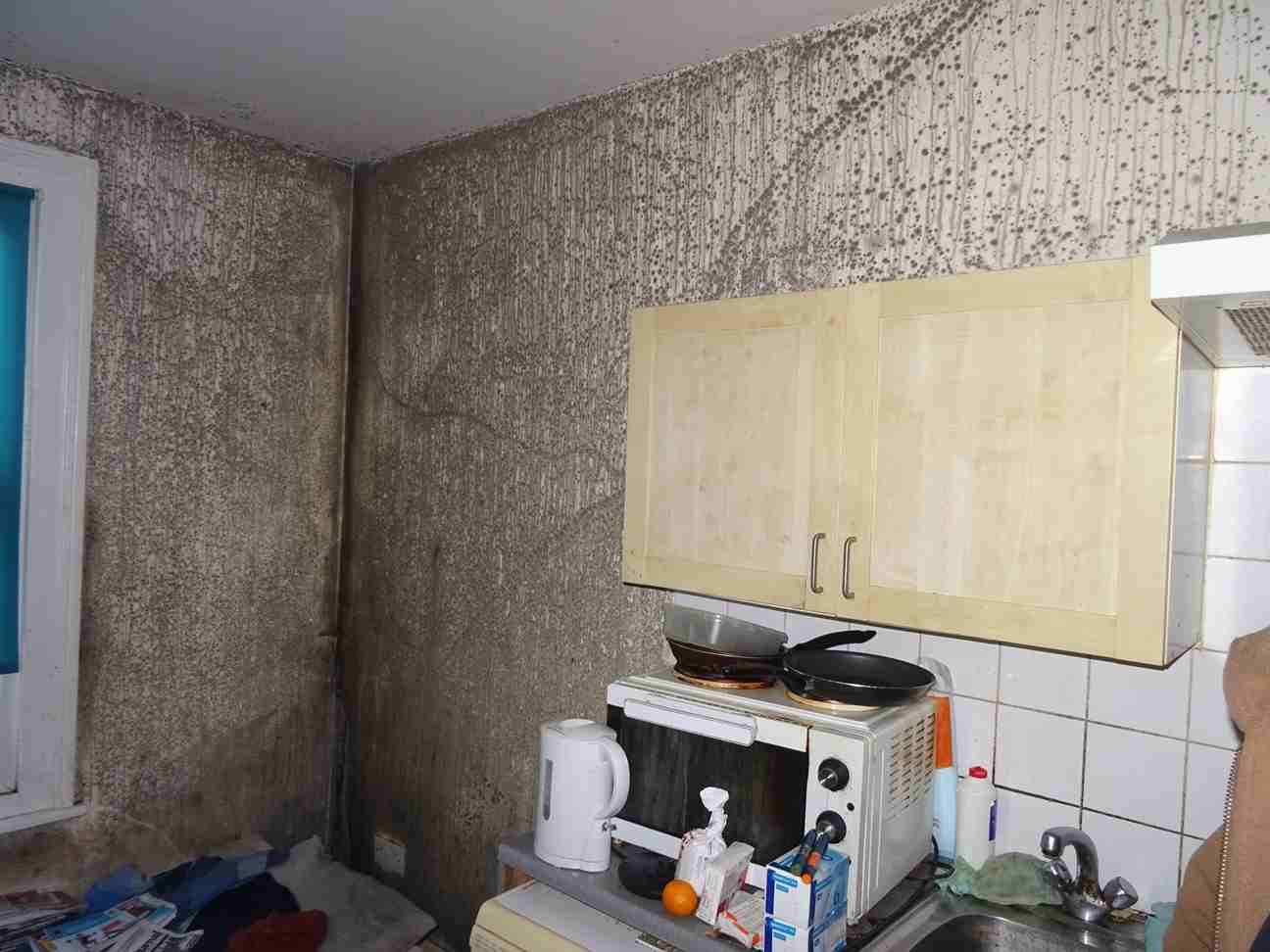
Look at the state of this flat. Here is independence vs neglect in austerity

These recent photos show the mould and mess in a one-room Haringey flat that is occupied by a man his mid-50s (I’m withholding his real name in this story).

This man has learning difficulties. He also has diabetes, which he struggles to manage, and is in poor health. These photos were sent to me recently. I visited this flat a number of times a while back and have known this guy for several years. His living conditions are usually atrocious.

He is about to be evicted from this flat, because it is in such an appalling state. He received a court notice last Thursday. He brought the notice in to show members of the Kilburn Unemployed Workers’ Group at their Thursday afternoon meeting (he also had other photos of the mould in the flat, which he showed us).

Some history:

This man lived with his mother until she died over a decade ago. While his mother was alive, he always had work as a general and kitchen assistant in hotels and kitchens.

This man was made redundant from his last job about nine years ago. He signed on for jobseekers’ allowance and has been put through the DWP’s usual Work Choice/Work Programme mill, with no results whatsoever. He has not found work again. His health has deteriorated to the point where he needs to apply for Employment and Support Allowance. Members of the Kilburn group are helping him with his forms.

Since his mother died, housing has been a major challenge for this man.

So.

There are two main problems for people in this sort of situation.

The first is accommodation itself – finding places in the private sector which people can afford to rent when they rely primarily on housing benefit. Continue reading

Benefit cap arrears and eviction threats for women and children. Already.

Another short post on impossible situations:

Here’s a rent arrears demand recently received by a woman who lives in a Basildon flat with her three young children (the arrears have increased since she received this letter).

It appears these arrears have come about because of the recently-lowered benefit cap.

This woman’s benefits exceeded the Out of Greater London limit of £384.62 by about £100 a week. As a result, at the end of last year, her housing benefit was cut by about £100 a week from about £188 a week to to £87 a week (think the sums are correct, looking at the paperwork. Give me a shout if you think the totals need looking at. Maths problems with these things are not at all uncommon).

Basildon council recently gave this woman a discretionary housing payment of £20 a week to cover some of the rent shortfall. That helps a bit, but only a bit. She only gets the DHP for the short term, too. After that, she either finds the full whack each week, or moves house again (this time with a serious arrears history) and takes the kids out of school again (she was recently in temporary accommodation in another borough)… or she ultimately gets evicted, I guess:

“I don’t know what to do,” she says.

I don’t really know what to do either, if I’m honest. Which is not particularly helpful.

What I do know is that I spend an awful lot of time these days with people in different parts of the country who show me demands for rent money they can’t pay and/or which say court and eviction are on the cards. As I write this, an email about a looming eviction in Haringey has landed in my inbox. I go to foodbanks and foodbank-lunches and inevitably end up talking to at least one person who is clutching a folder of letters about rent arrears.

Continue reading

More views outside the bubble: Hating the government, hating the left, and liking Brexit

Another perspective from outside Zone 1:

Posted below is a transcript from a recorded interview with Paul, 47. This interview was recorded in mid-January in Oldham.

This is a story about resentment. On one level or another, a lot of the interviews on this site are. I speak mainly with people who rely on social security systems. They have not thrived as attitudes towards people who receive benefits have hardened. You find a blistering anger a lot of the time. People say they resent government. They resent being patronised by the officers they must deal with in the social services bureaucracies they must use. They resent people who they perceive as activists, do-gooders and meddlers. They resent, poisonously, their lack of power over any of these things. As you would.

So. Anger.

Paul said he was on Incapacity Benefit (the benefit may have been the Employment and Support Allowance). He lives in a housing association flat in Ashton. He said he worked as a painter and decorator when he was younger. He receives his benefit for stress, anxiety and depression.

Paul doesn’t vote in general elections, but he did vote in the EU referendum. He voted Leave. He voted Leave, because he wants “proper border control… because [what we have ], it’s non-effective… I voted Brexit, because it is not about fundamentalism. It’s about not wanting to be taken over. It’s about the fear of being taken over, of being a foreigner in your own land…I feel a foreigner in my own land. Ridiculous, isn’t it…it’s a league of nations here.”

Paul resents this government – “the prime minister. She doesn’t live in the real world.” He dislikes the “patronising” left – “they have just bought into this philosophy – of all feel sorry for us.” He is angry about benefit sanctions and at people being forced to steal when their benefits are stopped – “it’s a shame that [people] have to burgle, because most of them have been sanctioned.”

I post this conversation, because it is one of many that I and others have with people on similar themes. I also post it because the views of people who rely entirely on benefits at this point in history should be recorded and heard. There’s a great deal of talk in the mainstream about (politically useful) Jams and Squeezed Middles and the rest, but I feel that we hear less from people who must exist completely in the system and who are not thought relevant because they don’t always vote, they don’t make money and they’ve been thoroughly dismissed as scroungers.

I often think there’s a feeling out there that if you ignore people who are already marginalised, they’ll ultimately go away. Actually, people don’t go away. They get angry:

“Leftwing liberalists, liberalism,” Paul said when I asked him what he thought was wrong with the world. “They have just bought into this philosophy – of all feel sorry for us…they buy into this philosophy of – “Oh, show a real caring heart, because they like to. They’re hell bent on patronising people, these liberal lefties. They don’t just want to patronise us. They want to patronise the foreigners as well.”

and:

“…the prime minister. She doesn’t live in the real world. Tony Blair, Gordon Brown [and] when it was a coalition – Clegg. He’s another one.”

I’d say this, too, just by the way. Stand Up To Trump coalitions and Pro-Europe marches can seem a very long way away when making and transcribing these interviews. That’s not to say Trump and Brexit should not be stood up to. They should be stood up to. It is simply to say that when you’re out and about, campaigns you see discussed all-out on Facebook seem a long way away.

We recorded the interview below in January at an Ark voluntary action lunch in Oldham. The Ark group puts on a free meal at the Salt Cellar each Tuesday. There’s the food, prayers, sometimes a bible reading, a thought of the day, music and, in the middle of the room, a popular pool table. People who are dealing with addiction, homelessness and other issues attend. It’s a social place. Paul travels to the Salt Cellar from Ashton each week by bus to meet and chat with others. I go along every few weeks to record interviews. People give their views on topics such as politics, benefits, sanctions, Brexit, immigration, work, housing, religion and sport.

Here’s Paul, 47, on 17 January 2017 at the Salt Cellar with his perspectives:

“[The big problem today] is leftwing liberalists, liberalism…. They have just bought into this philosophy – of all feel sorry for us. Feel sorry for us… gone too soft… [They] buy into this philosophy of, “Oh, show a real caring heart,” because they like to… they’re hell bent on patronising people, these liberal lefties. They don’t just want to patronise us. They want to patronise the foreigners as well. They are hell bent on patronising foreigners, because that’s how they get off. Their egos. It’s their personal own private egos, because they’re on an ego trip.

How does [the left] patronise?

Paul imitates. [Lefties say] “Oh, what a shame, isn’t it, I feel sorry for them [poor people], but we’ve got to keep in with the church, haven’t we. We got to create jobs for these people who are in these foodbanks. We’ve got to be seen to be doing something” – when really, it’s that personal fucking ego that’s driving all that. You know what I mean – sort of, “let’s integrate everybody into this big bubble.”

What does England need to do now? What are the problems?

Proper border control, because it’s non-effective [as it stands]. Continue reading

Councils, housing associations and the DWP are crushing people with debt

While Brexit and Trump hoover resources and headlines, the state and so-called social landlords continue to get away with screwing people into the ground:

Last week, I spent several hours at the South Chadderton foodbank in Oldham speaking with people who’d come in for groceries.

We talked about the reasons why people needed to use the foodbank.

One explanation in particular came up, as it does a lot: Debt repayment plans are leaving people with no money.

People on benefits and low incomes are repaying arrears or loans money to councils, housing associations, the DWP, bailiffs and god knows who else – but they can’t afford it. The loss of the fivers and tenners that authorities deduct in repayments make a tolerable life impossible. People certainly don’t have the hundreds, or sometimes thousands, of pounds that are really needed to shift these debts. Simple equation, when you look at it. Debts grow and penalties grow, but income does not.

Still, we have these repayment plans.

At South Chadderton, I talked for a long while with a young guy called Neil (name changed. There’s a transcript from the interview we recorded at the end of this post).

Neil needed a food parcel, because Oldham’s First Choice Homes housing association and the DWP were taking cuts from Neil’s benefit for rent arrears and loan repayments. Other authorities were queuing up for a share: Neil had been summonsed to court for council tax arrears. Neil couldn’t afford the repayments, but he had to pay all the same. You’ll see from the letter above that First Choice Homes is taking £30 a fortnight for rent arrears (out of a benefit total of about £130).

Neil said that talking to the housing association was hopeless (I offered to make a call).

“They say the lowest they can go is £30…they’re on the phone, going on with themselves.. I said, “hang on a minute.” They said, “can you make a payment now?” I said, “I’ve got nothing to give you.” (I’ve had plenty of similar conversations where I’ve tried, fruitlessly, to convince organisations to go easy because people can’t meet their debts).

It should come as no surprise that Neil was recently done for theft. He did a stretch last year for theft by finding – “[it was] a load of slates in the alley. They’d been there for two year.” This sort of story is very common indeed. I’ve met a number of guys in the area now who’ve been in and out of jail in recent times. (Two out of the three people I spoke to at the foodbank last week had done time).

The problem is life when people get out. Neil lost his housing benefit while he was in prison. He ended up with rent arrears. That total has gone up again, because he didn’t make repayments over Christmas and New Year. Neil decided to keep hold of his benefit money instead. Might as well be hung for a sheep as a lamb, etc. I’d take the same view myself. Neil couldn’t stand another call with the council or the housing association on the topic. I find this all the time these days as well. Every contact with the bureaucracy is a bitter fight. People don’t even want to talk to an officer to ask if calculation mistakes have been made, or to question sums they don’t understand, or if letters are correct, or if there are other options for help.

Continue reading

Can’t use a computer, or read or write very well? Tough. No benefits for you.

A few thoughts on Damian Hinds’ claims that jobcentres aren’t needed because more and more people claim benefits online, because I feel like having a rant on this one.

This line from government – “people don’t need face-to-face services because they can easily access benefits on the internet,” makes me absolutely furious. It is deceitful. Very.

The truth is there’s a whole group of people who can’t – and so don’t – use computers at all. They are entirely unable to make or manage online accounts of any description. They find completing online forms impossible. In my direct experience, quite a few people struggle to read and write as well.

I am constantly struck by the number of people I meet in the course of my work who have serious literacy difficulties. We all know the problem exists, but it is still unsettling when you experience the real-life extent of it. I’m better at picking up on this than I was. Some people tell you about their about their literacy struggles directly. Others speak about the problem in a sort of code. People will ask you to read and/or fill in forms for them – they’ll speak while you write. Others will say that they can’t fill in a form, or look a webpage right then, because they forgot to bring their glasses. That happens quite a lot. You start to get the drift when you meet with people on different occasions and realise they say the same sort of thing every time.

One thing is for sure – you have a much-reduced chance of claiming benefits online, or managing a web-based jobsearch if you struggle to read, write, or use a computer and have nobody to ask for assistance.

God knows I’ve seen that plenty of times. Readers of this site will know that I’ve documented people’s computer and written literacy problems in the past few years as they’ve tried to make benefit claims, or carry out the DWP’s exacting jobsearch requirements online.

Filling in job applications can be challenging enough. Here’s a Morrison’s job application form filled in by Eddie*, a man in his 50s with learning and literacy difficulties who worked as a kitchen assistant for years and wanted another job, but was not likely to find one given his age and declining health. I wrote the words Eddie wanted in his application on my notepad. He wrote them on the application form like this:

Continue reading

How the Universal Credit bureaucracy can screw your chance of paying rent

This story will give you an idea of some of the reasons why people can end up with rent arrears when they’re trying to set up a Universal Credit claim.

It should also give you an idea why some jobcentre meetings drive me to the brink.

So.

I recently attended a meeting at Croydon jobcentre with a woman who has been trying to sort out the housing component of her Universal Credit claim for several months (I’ve posted a short transcript from the meeting below).

You’ll see from the transcript that the meeting was ludicrous.

The problem was paperwork, as it often is.

The jobcentre had told the woman to bring in her tenancy agreement and bank statements to make her Universal Credit housing component claim. The woman did exactly that. She had all her papers ready to go. We were expecting plain sailing from there. Unfortunately, that wasn’t quite what we got.

The jobcentre adviser began by accepting the woman’s tenancy agreement and bank statements.

Then, the adviser suddenly decided that the jobcentre couldn’t accept the papers. The whole thing was utterly bizarre.

The problem was that the name of the rent recipient on the bank statements did not match the landlord’s name on the tenancy agreement.

The explanation for this was simple. The names were different because the rent was paid to the letting agent who managed the property for the landlord. The agent’s name appeared on the bank statements. The landlord’s name appeared on the tenancy agreement. This happens from time to time. I’m pretty sure that it’s happened to me in the past. There was another small problem – the agents hadn’t written the monthly rent total on the tenancy agreement.

None of this seemed a major obstacle to start. The jobcentre adviser could see from the bank statements that rent was being paid each month – a point the adviser happily conceded at first.

“I’m going to accept [the bank statements], because you’ve got a standing order… you wouldn’t be paying the money for any other reason.” (The woman who was applying for the housing component has been paying the rent with the help of a friend. That was the only way she could stay housed and avoid arrears. She’d waited weeks for her UC to begin, as people must).

Then suddenly, the adviser decided that the jobcentre wouldn’t accept the papers after all.

“We can’t progress the housing payment until all the documents are in order. They are not in order at the moment.”

“This says…[a different name for the landlord]. No, this is not going to be good enough.”

“I’m really sorry about all of this, but this isn’t ….the details you provide us have to be precise and they have to agree with what’s on here.”

“I’m going to have to make you another appointment.”

Continue reading

Doesn’t matter if you’re ex prison or drink or use or what the hell. Everyone deserves housing

A bit about how quickly people end up back on the streets, homeless:

Yesterday, I planned to meet James, 50 and Vance, 43 – two Oldham guys I’ve been spending time with over the last couple of months. Both James and Vance have been in and out of street homelessness over the years. We’ve talked a lot about that.

Vance was finally placed in a flat in Oldham last year. He invited James to move in one day when he found James trying to sleep on the concrete landing outside Vance’s flat.

“He [James] was sleeping outside on the landing. I can’t see that, because I’ve been homeless meself…I did if for years meself. I slept on the streets, but I got sick of sleeping on the streets, so I bought a tent. I lived in a tent for five year. It is very cold and wet… and with snow. You can’t sleep.”

That arrangement went well until very recently.

The first thing I noticed was the guys didn’t show up for the Tuesday lunch we meet at in Oldham’s Salt Cellar building. Fair enough, I thought. Maybe they’d had a few drinks. The rules about turning out for lunch after a couple of cans are strict at some lunch places. You hear about people being asked to leave.

Maybe it was something else. I called James to see if he was in anywhere in town. He answered. He wasn’t in town. He sounded stressed. He said that some guys had thrown him out of Vance’s place very late a few nights back – not Vance, but some other people who hung around. He said they’d hit him and told him to leave and so he’d left. He was staying with someone else for a few days, but this was not a permanent arrangement.

“I’ll be back to being on the street again,” he said. He sounded panicky, as well he might. It’s cold out at the moment and always raining.

I asked James if he’d been to First Choice Homes to tell them about his problem and to see if they could find him anywhere to stay. He said that he had and nothing had come of it. I said I’d go with him later this week. He sounded reluctant. He said that he’d get nothing. Generally, he gives bureaucracies a wide berth these days. I’ve written about some of the reasons for that.

Anyway. There we were.

I have conversations like this from time to time. It’s difficult to offer answers, not least because there aren’t any. I can say this, though – conversations like this one are the reason why I will never get on board with notions of deserving or undeserving social security recipients. The fact is that everyone deserves shelter. In particular, everyone deserves shelter at a time of crisis. It doesn’t matter what a person has “done” in life to arrive at the sort of situation described here. All that matters right then is that a person is in this sort of situation. Nothing else is relevant. You have a bloke in his 50s on the phone who knows that he is on his way to sit out in the rain. Only a sociopath would interrupt him to say that he had it coming. Theresa May et al ought to take a few of these calls and see if they feel like passing judgement right then, at the actual point that someone is headed onto the street. No doubt they would.