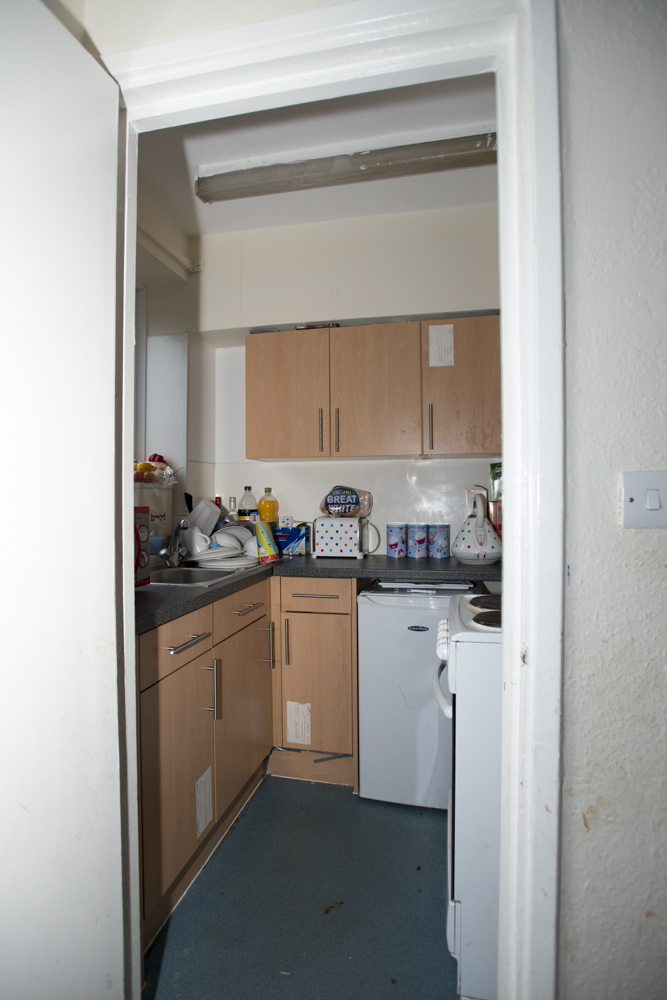
Placed miles away in temporary housing and can’t afford the commute to work? Too bad.

My first outing on the Sentinel news blog:

Homeless mother of two Alicia Phillips explains how the housing crisis and an expensive commute from Boundary House – an isolated temporary accommodation hostel in Welwyn Garden City – are destroying her work and training options.

Alicia says that Waltham Forest Council told her she’d have to give up her job as a nursery nurse in London if the commute from Boundary House was too expensive and difficult.

This is how single mothers are punished in austerity. They’re actively relegated to a poverty trap. So much for Stephen Crabb’s fantasies about the government’s commitment to getting women out of that trap.

Read the rest here.

The one where the council officer hangs up the phone on a homeless woman…

SIGH.

Here’s an example of the struggle that people who are on the rough end of austerity have even to be heard. Thought I’d throw this one up there as just another example from the many I’m working through:

A couple of weeks ago, I decided to go in for an experiment of a kind. I sat with two women who live with their small children in temporary accommodation in Boundary House, a cramped Welwyn Garden City homelessness hostel, and called the Waltham Forest Council press office so that the women could respond directly to a press statement that the council had sent me about standards at Boundary House.

Waltham Forest Council sends homeless families to live in tiny, one-room hostel flats at Boundary House, sometimes for a couple of years at a time. Some families live four to a single-room studio flat. There are and have been all kinds of difficulties at Boundary House. Residents talk about overcrowding, problems with a lack of hot water, problems with security in the building – so, when I first wrote about the place, I sent questions about these sorts of issues to the Waltham Forest council press office. “We will investigate this further if full details are provided,” the council said in a line about the hot water. I saw that line kind of beaming out at me and I thought – Okay. I’ll read that as an invitation and take the council up on it. The hell with it. I’ll call the press office while I’m sitting with Boundary House residents and hand the phone to residents so that they can provide the press office with those “full details” to pass onto the housing department for resolution.

Some might say that it was unorthodox to ring the press office in that way, but I can’t say that I gave or give much of a stuff about that. Residents were saying then that calling the housing department with problems yielded poor results and I personally long ago reached the point where I’ll try anything to get any officer’s attention on these sorts of issues, so in I went. I thought residents might as well give the press office invitation to investigate “full details” further a whirl.

Alas, this idea tanked: the press office didn’t want to speak directly to Boundary House residents. It seemed the office would take details from me, but not from the residents, even though they were a) better acquainted with their own details than I was and b) sitting right there next to me and available to speak. I argued this toss backwards and forwards on the phone with one bloke for about ten minutes. And then, the kicker: when I handed the phone to Alicia Phillips, a young mother who’d been stuck living in one of these tiny, single-room flats in Boundary House with her two young children for two years and who wanted to pass on “full details” of her problems at Boundary House to the council, the press office bloke hung up the phone. I rang the council and ask for a callback, just in case the hanging-up had been some kind of terrible technical mistake. Alas, that callback never came. The press office emailed me after a while, saying that it was probably better if we stuck to their format for communications. Boo.

Here is a recording of the hanging up:

I thought that the hanging-up was off, to say the least. I thought it was off, even knowing the way that press offices operate. I had the pleasure (ahem) of a job as a council press officer back in the day, so I am familiar with the workings of the role therein: an officer takes questions from a journalist, seeks a response from the relevant council officers and councillors, polishes that response until it is beautifully smooth and about 98% meaningless, and then sends a final, finessed result to the journalist. You’ll hear the council say in the recording that I don’t understand how the system works, but I do. I really do. Been there, etc. I understand perfectly well that press officers don’t resolve problems, as such. They collate council responses to problems.

For what they’re worth. As a rule, these responses are completely useless (certainly, most of the ones I sent over the years in the job meant nothing to anyone. They were paper printouts and faxes then, too. I bet people just used them to line the bottoms of budgie cages). It’ll be news to nobody that press office statements are almost entirely concerned with defending a council’s actions and reputation, as opposed to prioritising and addressing the worries of service users. They’re almost admirable the way that they shine no light whatsoever on the situation that you’re trying to get to the bottom of. You really might as well stick a jpeg of a horse’s butt on the end of your article. Still they come, though, and still we ask for them. I vaguely remember being told at journalism school that you must always ask for a council or government department’s view in the interests of “balance.” I’ve stuck with that instruction for reasons that increasingly escape me. I find that as I age, my patience for some of the garbage I’m sent is wearing thin (you should see some of the drivel that the DWP press office has poured into my inbox over the years).

Continue reading

Wonder how many women in austerity worry about their kids being removed

There is a quote below from one of the women I’ve been interviewing at Boundary House, a hostel for homeless families in Welwyn Garden City.

I’m publishing the quote here, because it’s the sort of comment that I’ve heard a lot in the past few years from women who are homeless and/or who are really struggling to make ends meet. They worry that their children will be removed if a council knows that they are struggling financially, or if they break down because they are under pressure and living in poor circumstances. I’ve written about this before: as I say, women have made this sort of comment to me over the years. People clearly believe that the threat of losing children is there. It is a thought and concern that they factor in:

“Like me and my children, we never had a house which is not overcrowded. Never. It has basically been like this a lot, but there was no support from council… Then, if I’ve gone crazy or something, then they would have taken my children away. That’s what I am saying. They draw you into this kind of situation, into this madness and then they say “Oh, you’re not a suitable mother. We’re going to take your children.”

I think about this a lot. I wonder how many people have this thought and concern in their heads. I wonder how many people decide never to challenge a council about their poor living conditions, or to never apply for, say, a discretionary housing payment to help make up their rent, because they don’t want to draw a council’s attention to their problems. For every woman I meet who has decided to protest about her living conditions, there must be plenty who have decided not to. Fear keeps people pretty quiet.

Posting here will less frequent for the next few months while I work on a case studies project. There will be more from this article in that project. You can still get in touch here.

This is how you and your kids can expect to live if you lose your home

These pictures were taken last week at a temporary accommodation hostel called Boundary House. The hostel is in Welwyn Garden City.

London councils like Newham and Waltham Forest send homeless families to live in this squalid place (I spoke with people from both places). Families with small children are packed in together in one room. We were showed around by Elina, 38. She lives in one room with her three young children. Two of the children are in school. Her youngest child is three. In that one room, there are four beds, a small kitchen, a table and everyone’s clothes and belongings hanging or lying where there is space. This is overcrowding to a very unpleasant degree. Five minutes in one room with that clutter closing in is all you need to understand why people in these chaotic, too-small spaces start to climb the walls. Claustrophobia doesn’t begin to describe it.

flat_interior_

Photo credit: Snapsthoughts http://photos.snapsthoughts.com/

Elina was sent here to live by Newham council 18 months ago. “They said it would be for three weeks.” I spoke to another woman who lives in one of these rooms with her husband and two of her children. Her two elder children live in another room across the hall. They let us see their flat. Another person who lives in a room on the top floor said the family has a sick child who has had three operations. That person said there was no hot water in the flat. “I have to boil the kettle and lift it through my children to have a bath… I told them and they said because I’m on the top floor the pump doesn’t reach up to the top floor… My child is sick.”

Picture: used and stained mattresses dumped in a storage room. Elina said that she was told by building managers to choose one of these mattresses when she needed a new one.

Mattress_storage_area

Photo credit: Snapsthoughts http://photos.snapsthoughts.com/

The costs for living here are prohibitive. These letters show that the cost for one of these rooms gets up past £1300 a month if you include the service charge.

Letter

The service charge intrigues me. All these costs intrigue me. I wonder how much property management companies are paid for running these places, or whatever it is that they do? Boundary House residents say that nobody takes responsibility for problems or repairs. This hostel is apparently managed for councils by Theori, a property management outfit of some description (you’ll see that Theori is described in the letter above as “The Proprietor of the accommodation.”) Residents say that nobody seems to be doing much by way of managing or propriet-ing: all they’re aware of is a monumental backwards and forwards exercise in Council-Theori finger-pointing. “You ring the council and you ring Theori. Nothing gets done.”

I get where they are coming from on that. I rang Waltham Forest Council and Theori on Friday for responses to the problems raised by Boundary House residents. This didn’t go too well. Theori said they couldn’t find a manager to talk to me right then. I left my number in case they found one later. I presume they didn’t, because nobody called back. I also rang the Waltham Forest Council press office and spoke to an officer there. He told me to email my questions through and gave me an email address. I sent the questions. The council didn’t respond, or even acknowledge the email. As for Newham Council – sadly, the Newham Council press office stopped talking to me a while ago when I was writing about the Focus E15 mothers’ campaign (“the Council’s communications team will not be continuing an ongoing dialogue with you”, etc, etc) so there wasn’t much point trying to make contact there. Boo.

A Newham council officer did attend a meeting with Boundary House residents on Thursday, though, after pressure from the tenants. I sat in on that meeting. Residents were furious and depressed, really. The officer said that their tenancies (or licences or agreements – whatever they’re called) at Boundary House were to end and that people would be rehoused. He obviously didn’t hold out much hope for decent housing options, though. He talked about a near-impossible private rental market and said that the council couldn’t house people in places that they couldn’t afford.

Okay. A few points for now. The main one is that this is the way a lot of people live now – families with little kids stuck in one far-too-small room in dirty, unkempt and unsafe hostels. Anyone can walk into Boundary House from the street (and people do walk in off the street, residents say. They’ve come in and found drinking parties taking place on the stairs). There are kids of different ages sitting on beds in one cramped room trying to do homework. Little kids have to try and sleep while older children are still wandering around. Clothes are damp and rooms are littered with belongings. There’s nowhere to store things properly. People can’t get basics like decent hot water.

I’ve seen this sort of thing a number of times recently and I keep thinking – there must be a whole generation of little kids living and growing up in places like this now. You can blame the families for poverty if you want – and plenty of people want to do exactly that – but that is getting none of us anywhere. The fact is that housing is getting harder and harder to afford. Pointing the finger at people who can’t afford housing doesn’t change that central fact. Government may insist that it’s up to individuals to Work Hard and Take Responsibility and provide for themselves and their families and all the rest of it, but on we go anyway and people keep turning up with no place to live. Some people in this hostel are in work. Others are studying and volunteering. Some receive benefits. It hardly matters. Nobody has money. This is how the safety net looks when you find yourself without money. This is how it will look for you and your kids if you ever lose your job and the place you’re living in.

People need to start thinking about that and about the future we are creating. For all of us.

More photos here.

Update 27 January:

An email turned up yesterday from Waltham Forest council which said:

“In recent years Waltham Forest has placed an increasing number of homeless applicants in other areas. This is due to the acute shortage of available properties in inner London, caused by shifts in the housing market and changes to the welfare system. We work closely with managing agents on any issues that arise, and can offer specialist support to residents where necessary.”

and also that Boundary House:

“is not a hostel, but an apartment building.”

which made me laugh. I get this from time to time from councils and others – a huffiness about certain language, because that language doesn’t help to draw the picture that a council wants to. I think I will probably continue to refer to Boundary House as a hostel, if it’s all the same with WFC.

I’ll go back to residents with some of the other points in the council’s response. Much of the rest of the council’s response was a defense of the current arrangements. It occurs to me that the council only needed to send a one-line reply to this, really – something along the lines of “we’d better head up there and keep heading up there until people feel comfortable talking to us and things are sorted out.”

Join the march against the Housing Bill this Saturday 30 January. Start from Imperial War Museum 12pm (Kennington Rd/Lambeth Rd SE1 6HZ) and march to Cameron’s publicly funded home in Downing Street for 2pm. Find out more here.

Posting here will less frequent for the next few months while I work on a case studies project. There will be more from this article in that project. You can still get in touch here.

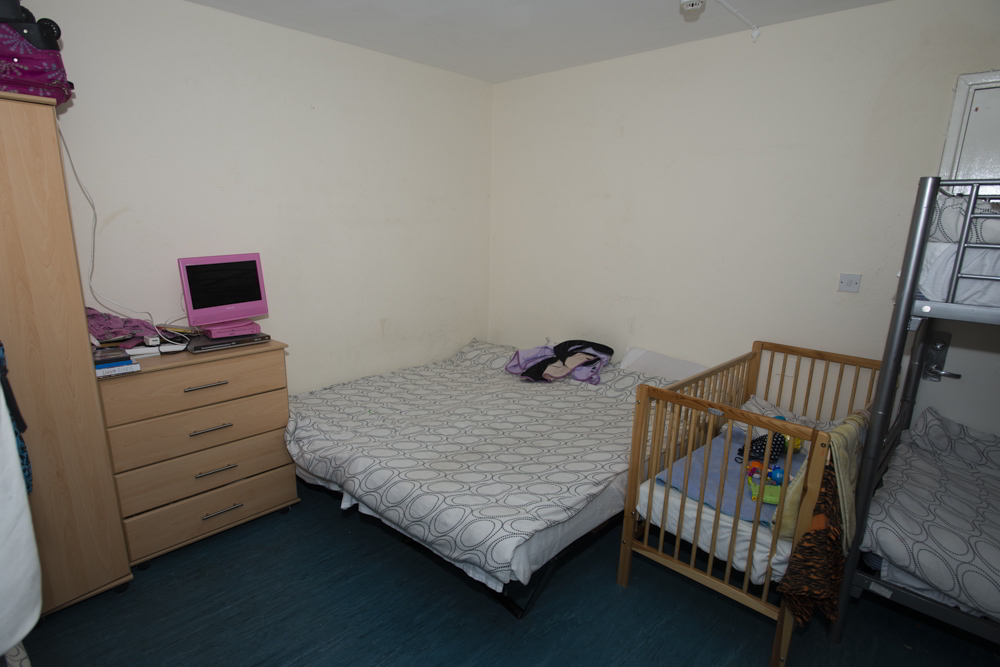
Work programme provider: we know jobsearch & Jobmatch are pointless, but do them anyway

Thought I’d throw this recording out there.

Here’s a little more evidence that the DWP and its work programme providers are perfectly aware that JSA jobsearch and signing-on regimes are not about helping people into work. At all. Those regimes exist only to force people through more and more hoops to keep claiming JSA.

In the recording below (made in mid-2014), you’ll hear a Reed work programme adviser tell me and Angela Smith that Angela needn’t worry too much about the jobs she selected to apply for in Universal Jobmatch, or whether or not those jobs were right for her. (Angela has a Master’s degree and now works as a support officer. She has cerebral palsy. She was signing on for JSA at the time of this meeting). Anyway – the adviser said Angela needn’t worry about the jobs she applied for in Jobmatch, because getting work wasn’t really the point of the Jobmatch exercise. The DWP didn’t care whether or not people got interviews and actual jobs when they selected jobs posted in Jobmatch.

“That’s not part of the remit at all,” the adviser said. All the DWP cared about was evidence that a JSA claimant had fulfilled their jobsearch requirements – that is, applied for an agreed number of jobs every week, or fortnight, or however often it was. You can even hear the guy say that he knew that another JSA claimant applied for a job as a sushi chef just to meet jobsearch requirements. The man had no training, or history in catering, but “he put it on there [chose the job in Jobmatch], because he was at his wits’ end as to what to put on there.” Cute. And you get the picture. It doesn’t matter if the person has a hope in hell of getting any of the jobs they find on Jobmatch, or even a job interview. That’s not the aim of the jobsearch and Jobmatch exercise. The aim of these exercises is to force people who claim JSA to go through the motions of applying for jobs to keep them in fear and in line. Continue reading

Older and with a sickness history? Is your best hope to lie about it.

Who knows.

Outside one of the North London jobcentres this week, I spoke with woman in her early 50s who signs on for JSA and works for several hours a week as a cleaner (she’s one of the many people I meet at jobcentres who must claim JSA because they need to subsidise the crap wages they’re pulling at low-paid, part-time work). This woman said she once worked as a dinner lady, but had to leave that job, because she has a heart condition (an enlarged heart and an erratic heartbeat, etc). She said that getting up at six o’clock in the morning for the cleaning job was a struggle, because of her heart problems. But hey. That’s us today. Nobody cares about older women with heart conditions. They can still drag a vaccum-cleaner about between pains and palpitations. Needless to say, this woman had been chucked off ESA, because she’d been found fit for work.

She said that a family member found the cleaning job for her. She felt that getting work through family and friends was her only real option, because of her sickness history. She didn’t think that she was likely to land anything substantial through more formal job application routes. Her health and her sickness record worked against her. Anyone who has ever got a job knows that you usually have to give your new employer your sickness record and sign some sort of declaration – and that your last employer can even be contacted by your new one for your sickness history. Depends a bit on where you work and how robust HR is, I guess, but I think we can safely say that it can be hard to leave your sickness history behind. This woman said that she’d even been told by an adviser somewhere that her best shot was to play her sickness record down, or to not really mention it until she had to, or something along those lines. So – that was great.

Does make me wonder, you know. I wonder how many older people out there with health problems are thrown off ESA and into this twilight-y world where they get a bit of JSA, and then a bit of cleaning work and a bit of caring work in places where nobody asks too many questions/will take them on to do someone a favour. I wonder how many people are spending their later years on that circuit.

“Why should I pay for other people’s kids?” Because that’s real social security. Stop whining.

A few thoughts on the modern world’s fear and loathing of single mothers:

A couple of weeks ago, I went to see a woman who we’ll call Becky. She was in her early thirties. She and her six children (aged seven and under) were living in a one-bedroom flat in a temporary accommodation hostel in South East London. The whole family (the family included an 18-month-old baby) slept in that one bedroom. You can see the beds and bunks in the photos below. The kitchen was tiny. There was just enough space for two adults to fit into it if neither of them moved around very much. Cockroaches rattled across the floor. Becky had plugged holes in the walls with foam to stop the cockroaches from getting into the flat and into the baby’s cot:

Foam In Wall

Apparently, Becky’s local council had told her the family might have to stay in the one-bedroom hostel flat for months. Big houses for large families were in short supply. Becky had 11 children altogether, but the eldest ones had been removed from her care and adopted into other families (Becky said that the council adopted out her white children. The six children she still had living with her were mixed race). One of her older sons lived with her sister. So, Becky was living in this one-bedroom hostel flat with her six youngest children. Her school-aged kids had to sit on the bunk-beds to do their homework while the littler ones raced around the room. This overcrowding was yielding exactly the results that you’d expect. Becky showed me a health visitor’s letter which said that her kids were falling badly behind in their milestones, at least in part because of their living conditions. That in itself is reason enough to find and finance decent accommodation for this family. Every kid deserves a chance.

Beds and cot

Anyway. I’ve thought a lot about Becky and her kids in the couple of weeks since I saw them. Mainly, I’ve thought about the shit that hits the fan whenever somebody writes about mothers who ask for state support. We all know how this one goes in our punitive age (read a few of the comments under this story if you don’t). Why, people will ask, did Becky have these children if she couldn’t afford to look after them? Where are the fathers? Why should this woman and her children be found a decent home? Why should taxpayers pick up the tab?

And on it goes. For myself, I have to say that I find this sort of dismissal – this slamming of doors, particularly in children’s faces – harder to handle as time goes on. It solves nothing and helps nobody. You find in it one of our era’s most poisonous political ideas: that you can sort a situation out simply by insisting it should never have come to pass. As it happens, there are – as there usually are – many reasons for complex situations: ill health, mental health, domestic violence, manipulation and a host of other forces that are beyond my perception and grasp. I don’t need to know the details and neither do you. Knowing the details doesn’t change the facts. Either everyone is entitled to basics like housing, or nobody is. That is social security. All that matters is the need at the hour of need.

Kitchen

“Worried about my 10-year-old daughter being safe in a B&B.” More homelessness stories from Newham

An update on this story: Candice, one of the homeless women I’ve been talking with in Newham and who is quoted below, was offered a place in Canning Town by Newham council today. Yesterday, she was told that she’d be sent out of London to live in Liverpool and that her case would be closed if she didn’t accept a place there. That would have been very difficult for her, because her family live in Newham and help her look after her 17-month-old daughter as you’ll see. Anyway, things seemed to change today when Candice went back to the housing office with a few people from the Focus E15 campaign. Canning Town it is.

———————————–

Yesterday, I spent several hours at the Newham council housing office at Bridge house with a number of women who are homeless.

Two things were noticeable right off: 1) that by the time I arrived at Bridge house at about 11, the waiting room was already full of people who had housing problems and 2) there were a lot of kids in the room. Some of the children were very young: in prams, or pushchairs. Some of the children were schoolage, though. I hadn’t thought about this aspect of things before – that instead of going to school on Monday morning, some kids go to council housing offices and wait while their parents try to sort out emergency housing. That’s surely got to put kids at a disadvantage as far as their schooling goes. I pretty sure there wasn’t a school holiday in Newham yesterday. I certainly asked around.

So. Below are a few interview excerpts which will tell you a bit about life for people who spend a lot of their time at housing offices asking for help because they don’t have a secure place to live.

One of the women with a child at the housing office yesterday was Charice Thompson. Charice said that she had been in the housing office with her ten-year-old daughter since about 9am. She had her belongings and extra clothes in bags with her. She had a plastic clothes rack with her as well – that was leaning against the back wall in the housing office. Charice said she’d been evicted from the revolting flat she’d been living in for three years for complaining about the standards in the place. She said that the flat had no hot water a lot of the time and that it was so badly infested with bedbugs that she’d ended up with a blood infection from the bites. She was clutching a letter from MP Stephen Timms which asked the council to house her and outlined her health problems. (I rang Timms’ office while Charice was waiting to see a housing officer, because she was concerned that she wouldn’t get to see someone and she and her daughter had nowhere to go last night. Someone from his office did ring me back yesterday afternoon). Charice and her daughter were given an emergency room in a hostel in Ilford at a charge of £196 a week. Her housing benefit would cover a lot of that, but she would still have to meet some costs. Continue reading

How about we send Robin Wales out of London. Who wants him. #FocusE15

From the Focus E15 campaign:

“Despite Newham Council’s attempt to evict us, we can today confirm that the E15 Open House occupation will continue until 7 October as planned.

We called Newham Council on the first day of the occupation to negotiate with us. The plan was never to stay indefinitely. They refused to speak to us. Instead they chose to use draconian and expensive legal procedures, threats and dirty tricks. They cut off our water and vandalized the water mains, served an unlawful court summons with only two hours notice and they have repeatedly misled the public.

If Newham had come to talk to us we could have agreed to leave within two weeks. Instead, they refused to enter into a dialogue. We would like to know how much taxpayers’ money has been spent on taking us to court, and how many people that money could have housed.

Our demands to the Council continue to be:

– Repopulate the Carpenters Estate with secure long term council tenancies now
– An immediate end to the decanting and evictions of existing residents
– No demolition of the estate
–  The management of Carpenters Estate by the residents, for the residents, no third party or private management

This experience has shown us that there is a broad based movement for council housing in London. There are empty homes in every borough, every town and every city in the country. Focus E15 show us that there are simple, community based solutions to the housing crisis.

We will continue to fight displacement and evictions and to campaign for secure, council housing through direct action, mobilisation and legal means. See you on the streets, in the courtrooms and in our future actions.

This is the beginning of the end of the housing crisis.”
Jasmin Stone and Sam Middleton Focus E15


More articles on Focus E15:

Open Democracy article: Why is middle class feminism so disinterested in women hit by austerity? (interviews with the Focus E15 mothers on their campaign to date)

Newham council runs out of meeting to avoid Focus E15 mothers’ protest

Focus E15 mothers take their petition for social housing to Boris at City Hall

International women’s day…yeah, right

Focus E15 mothers’ battle for social housing: an update

Young mothers occupy Newham council housing offices to demand social housing

Rubbish, mice and mould – good enough for young mums without money

Put this on a banknote: young mothers without money abandoned by the political class

More work programme provider shamelessness…

Sharing this story, because I love it so much:

Angela Smith is a woman with a Master’s degree and a long history of working in policy and disability support. She also has cerebral palsy and uses an electric wheelchair to get around. I’ve been accompanying Angela to her compulsory fortnightly Wembley jobcentre signons and meetings with the Reed Partnership, her work programme provider in Harrow. We’ve shown how difficult London buses can be for disabled people to use. We’ve also shown how pointless those fortnightly meetings at the jobcentre and the work programme really are when it comes to finding work.

Anyway. Angela has a new job. She got it without any help whatsoever from the jobcentre or the Reed Parntership. She found the job advertisement, filled in the application form, went to the interview and got through.

She did the whole thing entirely by herself. But that hasn’t stopped the work programme provider from trying to claim the result for itself. I went with Angela to her final meeting there a couple of weeks ago and saw this in all its glory. Her work programme adviser – a pleasant enough woman – congratulated Angela on finding a job. Then she said something along the lines of: “look, I know we haven’t helped you get this job at all – but would you be prepared to be featured in our Success Stories poster campaign? We could get your photo done and get a poster made. That would be really good.” There were posters on the office walls of people working at various jobs and saying things like: “I’m now running a successful business.” Angela and I decided that they must have been a bit short on successful-placements-of-disabled-people-in-work stories so they’d figured they’d have hers. Pity they had nothing to do with it.