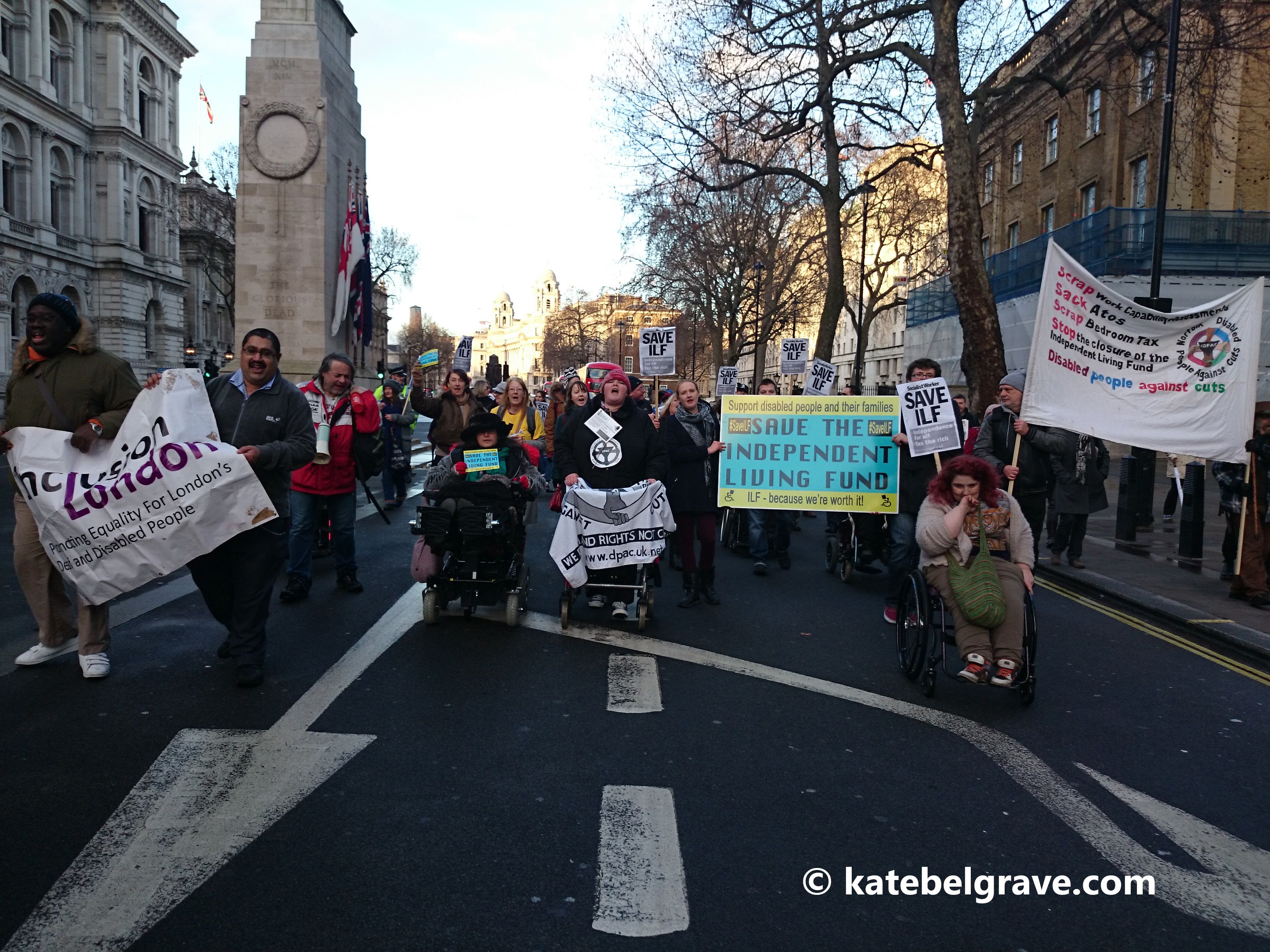
Protest, draw and write about whatever you like, as long as it’s not Austerity.

A few thoughts for Saturday:

I think that of all the nauseating shit that various worthies have guffed re: free speech this week, David Cameron’s contribution probably made me hurl the furthest:

“We must be very clear about one thing, which is we should never give up the values that we believe in and defend as part of our democracy and civilisation and believing in a free press, in freedom of expression, in the right of people to write and say what they believe.”

Sounds absolutely fabulous. One thing, though. I wonder if this Free Speech largesse will now be permanently extended to people who want to write, protest and say what they believe about David Cameron. I wonder in particular if it extends to people who want to protest and write against Cameron’s austerity cuts. I know that we were all pleased to discover that the right to pen cartoons in other countries will from this point be defended by a liberal colossus like our leader. I’m just keen to confirm that those who protest and report a little closer to home have the full green light as well.

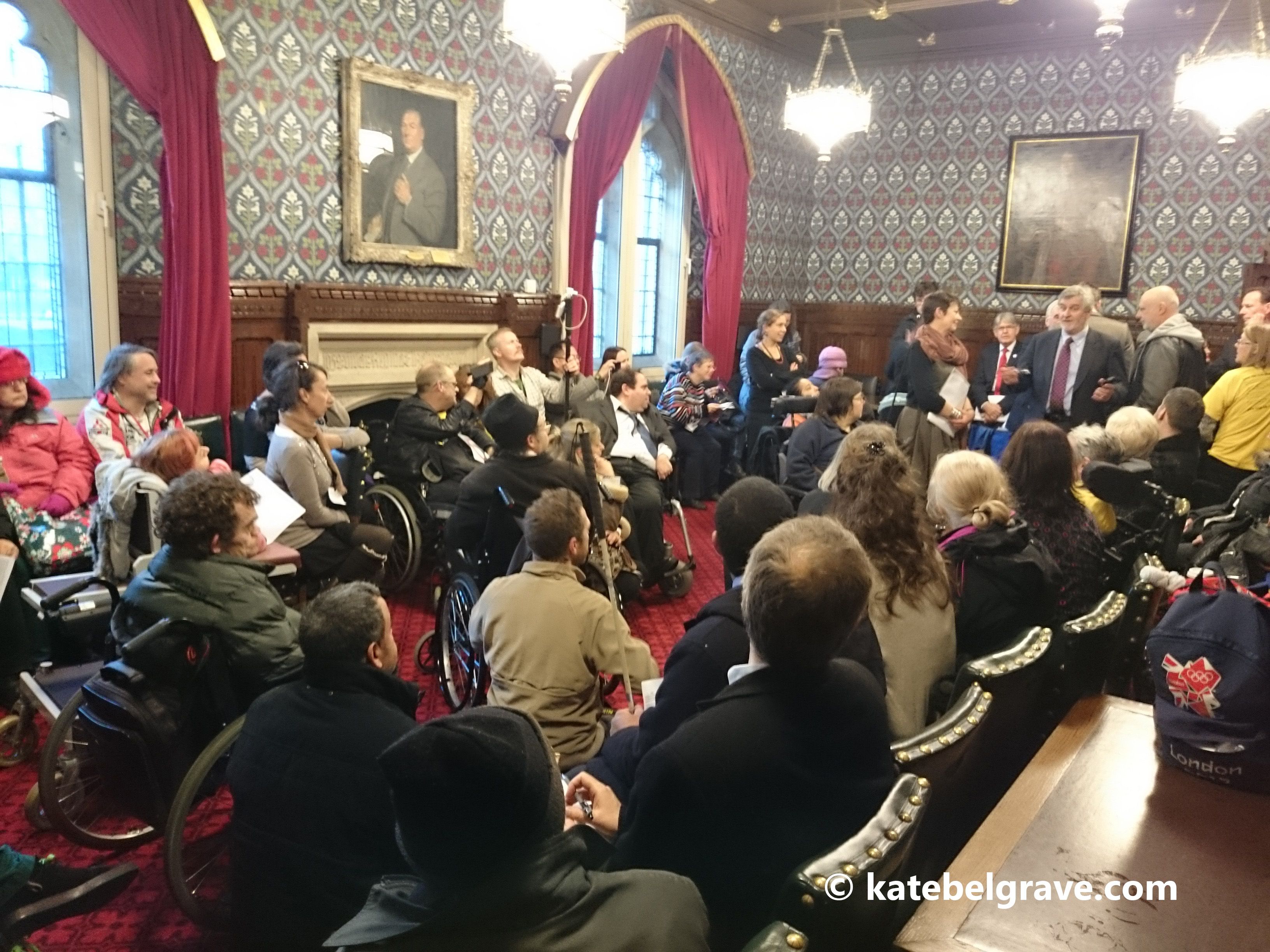
You’ll understand why doubt clouds this part of the picture for me. I don’t want to imply that we’re in totalitarian lockdown yet – I personally have a great deal of freedom and I don’t take it lightly – but things keep happening. They even happened at almost the exact same time that Cameron delivered the above ode to liberty. Here’s an anecdote for you. About 24 hours before Cameron came out with “the right of people to write and say what they believe,” I attended a lobby at parliament with a group of disabled people who’ve been engaged in a bitter three-year fight against a Cameron-government proposal to close the vital Independent Living Fund. This group of people use the ILF to pay for the extra carer hours they need to live independent lives. They can study, work, socialise and get out amongst it like everyone else. You might say that with that support, people have freedom. Without that money, these people will be in a very bad place indeed. It is not an exaggeration to say that some may die if they end up with inadequate care. We are most certainly talking a life and death situation here. We are talking about rights. We’re talking about the right of disabled people to live. That’s why so many people have fought so hard to get news of the ILF cut circulated. Nobody will let it go. Nobody can let it go.

Anyway, a journalist at the lobby started to livestream the event for the benefit of the many disabled people who weren’t able to attend, but who of course wanted to hear what MPs had to say about the future of the ILF. The ILF is due to close in just six months and people are naturally very worried. With a couple of honourable exceptions, the mainstream press has been utterly useless at reporting and campaigning on this funding cut. Livestreaming, protests and campaigner reports have been crucial to getting the news out.

Things were ticking along with the livestream and a number of people – one in tears –  explained their concerns to MPs. Then suddenly, some worthy burst into the room and said You’re Not Allowed To Livestream From Parliament – Turn That Thing Off. Continue reading
Disabled people block Whitehall and lobby MPs to save the Independent Living Fund

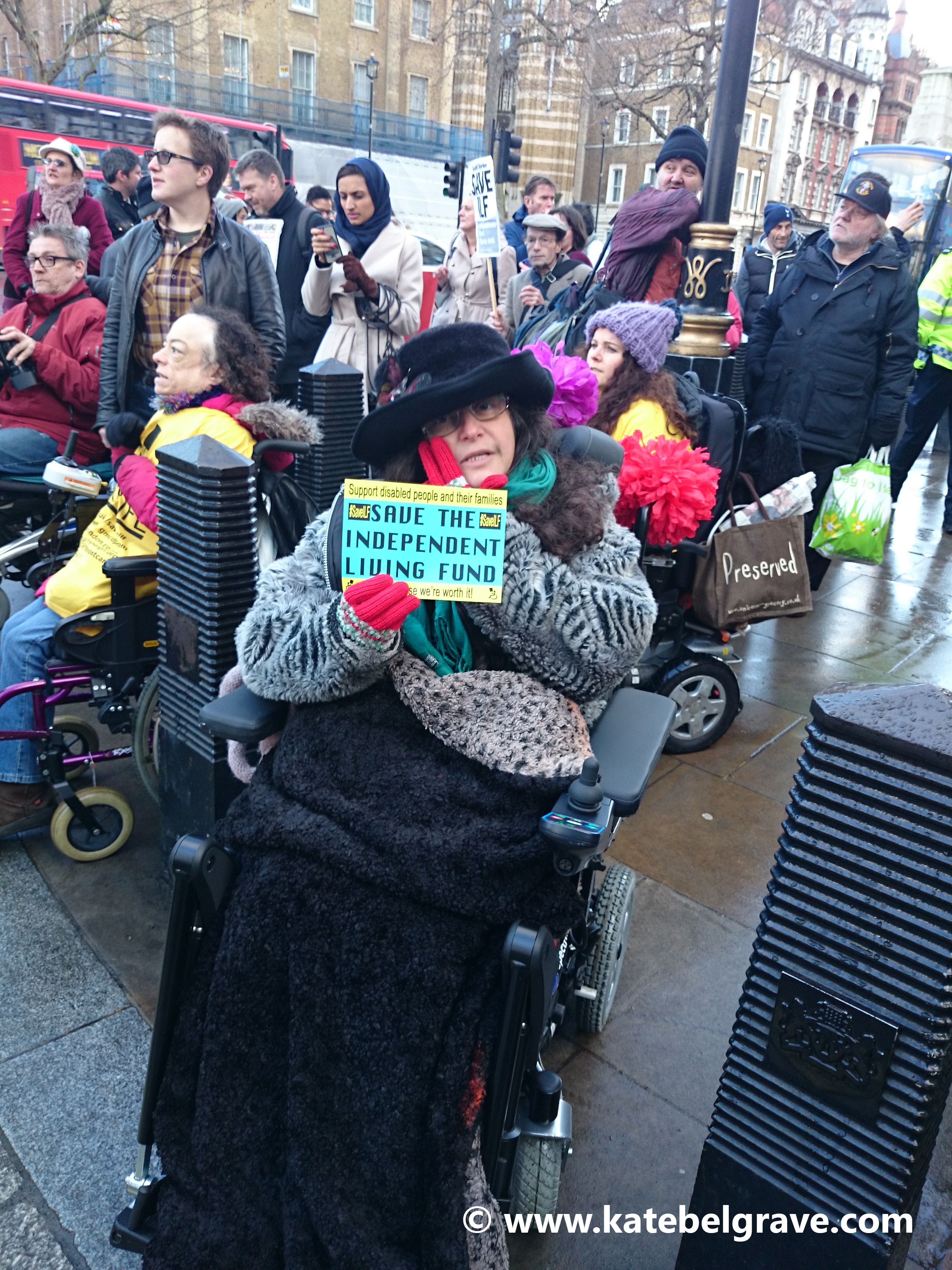
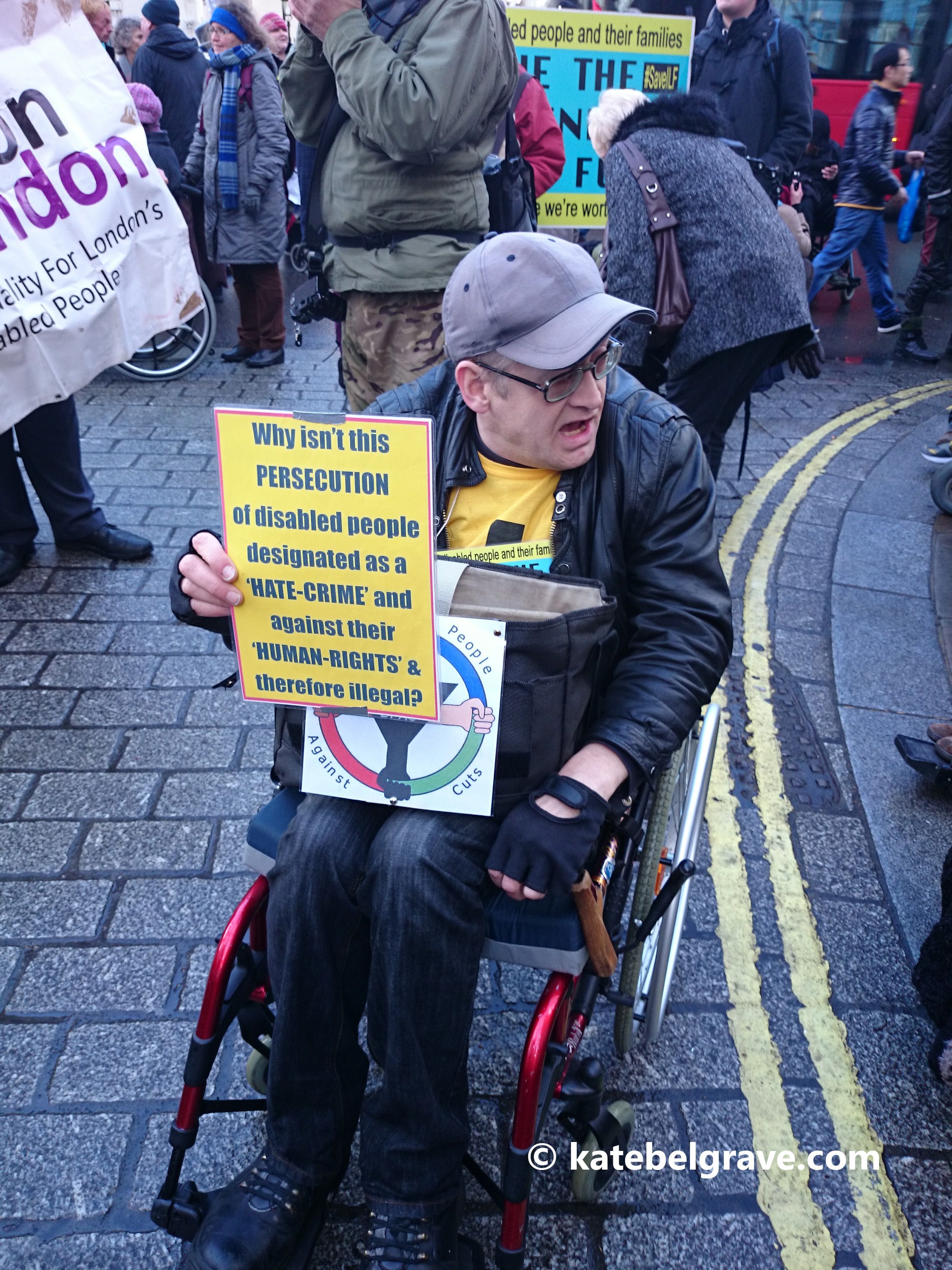
Disabled people and campaigners blocked Whitehall today and lobbied MPs to protest at the government’s plans to close the Independent Living Fund in just six months’ time. Here are a few clips, including one of (another) copper telling protestors that if they didn’t move off the street, they’d be arrested:

As readers of this site will know, the ILF is a fund that disabled people with the highest support needs use to pay for the extra carer hours they need to live independent lives. The government plans to close the fund at the end of June this year (2015). Without that money, these disabled people face lives shut away in carehomes.

Nobody voted for that.

As I’ve said many times before, these protests to save the ILF from closure are vital – to everyone, disabled or not. Saving the ILF is not just about saving a pot of money. It’s about saving the idea that severely disabled people deserve to live – like everybody else. Councils can’t afford to meet the full care costs of this group of disabled people. Some councils have agreed to ringfence devolved funds, but nobody knows how long funds will be devolved or ringfenced for.

I’m already talking to disabled people who rely on council funding for care and have to go without eating or drinking for hours because they can’t get the carer hours that they need. There are six months left to save the ILF. The fight to save it will escalate. Everyone knows how things will end for ILF users if the ILF is closed. This government couldn’t care less, of course. This government is murderous. Thing is – nobody is too convinced that a Labour government will care much, either. Labour has had several years now to commit to keeping the ILF open. Here’s shadow minister for disabled people Kate Green being extremely equivocal about that. I took that film of her towards the end of 2014. This is life and death stuff, so at this very late stage, you’d hope for more than you see in that film.

Save the Independent Living Fund

Save the Independent Living Fund

Save the Independent Living Fund

Save the Independent Living Fund

Pretty sure the government wants death, depression and crime for people who are out of work

A few thoughts as we kick into the year. Interviews from people who’ve been sanctioned at the end of the post:

As you’ll no doubt have read, the work and pensions select committee meets this coming week to hear evidence about benefit sanctions, with sanctioning connected to crime and depression.

Okay. I suppose that hearing will at least draw attention to the sanctions problem and the extent of it. It’s the What Next part that I wonder about. A lot of people know how things are. I spent many hours speaking to JSA claimants at jobcentres in 2014 (have posted some of those interviews below) and at least some of those people had complained to their MPs about sanctions and their treatment at jobcentres. Like many people, I can tell you now that there is absolutely no doubt whatsoever that stopping jobseekers’ allowance – already a meagre amount of money – to people who have nothing leads to crime and depression. You don’t have to look too closely to understand that that is the whole point of the sanctions/jobcentre/work programme exercise: to push anyone who struggles for work to the edge in one way or another and to terrorise everyone else into tolerating rotten pay and treatment just to keep a job. There’s very little mainstream opposition to that idea. I certainly don’t count this.

Three points of note from 2014:

1) Nobody I met ever got a job or even a job interview through their jobcentre. Not a single person. Everyone I met who found work did so through their own networks, applications and contacts. Jobcentres exist to administer goverment benefits policy and to channel people to the work programme and so-called skills courses, in my view. Wonder when jobcentres will be wholly outsourced.

2) Quite a few of the people I met who were signing on were actually employed for some of the time – on zero hours contracts, or short-term contracts, or on such low and irregular pay that they needed hardship loans and some JSA support. This is one of the many reasons why I find Labour’s ongoing justification of sanctions regimes in some form or other utterly misguided (I have other words, but am keeping it clean for the New Year). Pisstaking JSA claimants aren’t the problem. Pisstaking employers are the problem. That’s where the entire political emphasis should be. People I spoke to weren’t signing on for the lulz, believe me. They were signing on because it wasn’t possible for them to support themselves in an ongoing way at current rates and means of pay. Or they were stuck in workfare “jobs” that should have been paid and paid properly. Tinkering with sanctions policy hardly addresses the fact that sanctions in any form are about terrorising people into insecure, low-paid work and keeping them there. Let’s stop pretending that sanctions are about “mutual obligation” and other long-dated bollocks. Continue reading

DWP: You’re free to say No to pointless courses as long as you’re happy to be sanctioned

My word.

I unearthed this nugget as I went through emails on my glorious post-Christmas return:

You’ll remember that I’ve been trying to get information from the DWP about the ridiculous “work skills” and “employability” courses that JSA claimants must attend – you know, the courses where people have to roll marbles down a tube at a meaningful angle, or tear a piece of paper up and reassemble it with the help of other people to learn teamwork and so on. Some people even report being threatened when they complained about the (non) standards on this “training” to their course providers.

I’ve sent a number of FOIs about the costs and point of these exercises.

One question I asked was whether or not attendance on these so-called “work skills” courses was mandatory and if people had recourse if they wanted to refuse to attend. People regularly tell me that they’re forced to attend courses that have absolutely nothing to do with their line of work – or anyone’s line of work, come to think of it. Others say that they’re forced to attend courses that are very similar to courses that they’ve attended before. Often, these courses were completely useless the first time around. People wonder why they must return. They suspect the main lesson they’re learning is that when you’re unemployed, officials can humiliate you – often in repeat fashion – however they like.

Anyway. Interesting answer from the DWP on the compulsory nature of this. Basically, the department told me that people could refuse to attend these useless courses, as long as they were happy to be sanctioned for refusing. If people wanted to say that the course proposed for them was pointless and a waste of everyone’s time and money, or that they’d been on a near-identical course with no result – they could do this while appealing their sanction.

Brilliant. What could be fairer:

“A claimant may refuse to attend a course for the reasons you mention, but the consequence of doing so is that they may be subject to a benefit sanction. Claimants have recourse if their benefit claim is sanctioned. They can lodge an appeal against the decision. As part of consideration by a DWP labour market decision maker, claimants are given the opportunity to provide details of why they refused to attend and within this they could include their view on the relevance of the course in improving their prospects of employment.”

Pretty sure that this is a long way of saying “people must attend these useless courses, or we’ll cut their fucking money off.”

This part of the response suggested the same thing:

“Where it is identified by the DWP work coach that a work skills or employability course is best suited to addressing the JSA claimant’s main barrier to employment, then attendance on the course is mandatory.”

So. You’re out of work and your jobcentre tells you to attend a “work skills” course. You tell the jobcentre that you’d rather not travel across town several times a week to roll marbles around, a) because you’re an adult and b) because you’d prefer to do something useful – for example, to look for a job using your own contacts because the jobcentre and your useless work programme provider have never once got you a single job interview. Your jobcentre adviser says “that’s absolutely fascinating” and then cuts off your benefit money. Who says this process is unequal?

Bet the companies that provide these courses at god knows what cost think the system is brilliantly fair. They get bums on seats (££££) and a group of captive, cowed “students” who they can threaten with sanctions – and more – if anyone in the group dares to complain about standards. Trebles all round there, comrades. It’ll be a Happy New Year for that lot.

See you soon x

Blogging will be light over the next week or so as yours truly takes a few Santa days and wines… thanks to everyone who spoke with me for pieces for the site this year and who had me along to leafleting, meetings and events. You are all GREAT.

My key finding this year (same as last year’s, really): the world is made up almost entirely of fantastic and decent people who are ruled by a small band of elitist assholes.

The good people will win in the end.

Have a good one. See you soon.

“They sanctioned me. No money. I went to Tescos to steal. I don’t care.”

I still have quite a few transcripts from interviews with people on JSA that I haven’t posted this year, mainly because I sometimes run out of time.

Am posting some of them this week to give you a little more insight into a system in total meltdown.

These first two are about lives in a kind of meltdown as well – people who have been to jail, can’t get work and probably won’t, because this isn’t an era that does second chances. I can see a lot of people passing judgement on these two individuals. Can’t see too many of the judgement-passers offering solutions, though. I think there’s a feeling now – certainly among politicians – that certain people deserve to be on the scrapheap and should be made to stay there.

This first interview I did recently with a man on the work programme in North London. He’s on a community work placement (30 hours a week unpaid workfare) as a security guard in a local charity. He freely admitted he’d not had a CRB/DBS check for his charity placement, even though he’d done time in prison. I’ve raised this issue before and am still working on it – people on community work placements being placed in 30-hour-a-week unpaid workfare jobs in advice, security, or roles with young people without CRB checks. Am doing more on this at the moment, so this first one is brief, but read the excerpts for now and/or this story for more background.

This first man said his conviction was for ABH. Here are some excerpts from our discussion:

“I’m doing [working in] security on a 30-hour a week placements. What a waste of time it is. I am supposed to be doing security and I’m sitting around doing sweet FA. I’ve got a criminal record. They [the charity] have got several offices, loads of computers, four of us doing it [the security job]. If I was doing it [the security job] properly [as a paid employee], I would have to be CRB checked.

“There’s about 15 or maybe 20 people from the work programme. There’s also a load of foreign students doing internships. They are there for four to six weeks. I’m there for 26 weeks. I’m only two weeks into it and it’s a complete waste of my time. Security involves just standing around and going up and down the blinking corridors. I’m going out fundraising as well – doing bucket collection. I did a couple of days bucket collection down out the front of the shops.”

More on this in the New Year.

–——————————

This second interview was with a man who was signing on in West London. He was also an ex-prisoner. He talked in detail about the realities of life for people who end up in jail: you go to prison, you get out, you can’t get work, you sign on, you get sanctioned, you steal because you haven’t got money, you fall in with the old lot to get more money, and on it goes. Doesn’t matter whether or not you think that should happen, or whether Iain Duncan Smith thinks people in this guy’s situation should pull themselves together of their own accord, or whatever. This is the reality. This is how things go. I’ve spent a bit of time this year with guys who’ve been in and out of prison, so will post more of those interviews when I’ve transcribed them. I should catch up with the guy in this interview again in the New Year (he was in and out of the Scrubs). Doubtless he’s still doing the same sorts of things. Can’t see that he’d have too many other options if I’m honest:

He said:

“If you put the money in an alcoholic’s account, he’s just going to spend it. And then get evicted [for not paying rent]. Which is what they [the government] want. If I was on Speakers’ corner, I would say that. Because I have suffered here [at the jobcentre] from sanctions. I had to go shoplifting, because they stopped my money. When the police arrested me, I told them why. I told the courts – it was because [I was late] five minutes [to the jobcentre]. There’s no flexibility. I even produced a replacement bus ticket because the bus broke down. I was still sanctioned. When I signed on, they didn’t tell me that “your money ain’t going to be there.” Very nasty. So when I signed on, I went to draw my money. Nothing there. I didn’t eat for a day or two and my electricity… I went to Tescos to steal. I don’t care. Continue reading

Mass action to #SaveILF 6 January 2015. Can Labour be better than useless for once

Disabled People Against Cuts is calling for a mass action at the House of Commons at the start of next year to save the Independent Living Fund.

Last week’s court case to save the ILF may have been lost, but in no way did that represent the end of this fight. Doesn’t matter what this government thinks it has won.

The ILF is a fund that disabled people with the highest support needs use to fund the extra carer hours they need to live independent lives. It will surprise nobody to hear that this government wants to close the ILF and to sentence profoundly disabled people to lives shut away in carehomes. Disabled people and campaigners are not going to tolerate that. Nobody should tolerate that. Why the hell should any of us tolerate that.

In this film, ILF recipients talk about the role the ILF plays in their lives and how intolerable life will be without it:

We’re all in it together – aren’t we? from Moore Lavan Films on Vimeo.

Labour is still refusing to commit to keeping the ILF open, which is utterly useless of them. The fight to save the ILF has been going on for several years and all Labour has is…err, Let’s Wait A Bit Longer. Hammersmith and Fulham council has committed to ringfencing any devolved ILF funding, but I think of that as a late effort at best, especially at this stage. Nobody knows how long ILF funding will be devolved to local authorities, how much money councils will get if funds are devolved and for how long, or if councils would continue to commit to ringfencing it. Politicians need to commit to keeping the ILF open and reopening it to new applicants (the ILF was closed to new applicants in 2010). They need to commit to the idea that disabled people have as much right to live full lives as everybody else does. That idea is being relegated to history.

The sad truth is that these days, you’ll be a long time waiting for Labour to pull finger to save any aspect of social security, including this one. Which leaves people with a fairly stark choice. They can wait for politicians to get their act together, or they can get stuck in and sort problems out themselves.

Earlier this year, ILF recipients occupied Westminster Abbey in protest at the proposed closure of the fund.

On January 6 2015, there will be a DPAC-style lobby of parliament.

Says DPAC:

“We must stop disabled people being pushed back into the margins of society. We will not go back into the institutions. Our place is in the community alongside our family and friends and neighbours and we are fighting to stay.”

Exactly.

The action will take place on Tuesday January 6 2015, 1.30pm for 2pm start, House of Commons, SWIA 0AA.

Be there.

On the subject of the useless work skills courses JSA claimants must attend…

As readers of this site will know, I’ve been chasing the DWP for details of the useless “work skills” and “employability skills” courses that JSA claimants must attend on the threat of sanctions… people report being forced to attend courses where they have to build towers out of drinking straws, roll marbles down tubes and tear up pieces of paper to reassemble in the interests of accquiring teamwork skills… Some people I’ve spoken to even said they were threatened when they dared to complain to providers about the courses they were sent on. This all goes on because ritual humiliation of and aggression towards people who are out of work is thought to be absolutely fine in our day and age….

The DWP press office ignored my questions about this, of course, so I sent the department an FOI. I asked for lists of providers of these courses, how funding streams work, how much providers like Reed and A4e charge for attendance on these courses, what sort of quality control is in place, what standards (if any) course providers must meet to provide these courses and if the courses are indeed compulsory – ie, why are people threatened with sanctions if they refuse to attend, or say a course does not match their skill set? Surely the DWP can share its own rules re: whether people are threatened with sanctions if they refuse to attend these so-called skills courses.

Needless to say, the DWP responded with a section 12 – cost of information extraction exceeding the £600 limit, etc. The DWP said it does hold some of the requested information, though, so I’ll be redrawing the request. I’m particularly interested in the costs of these courses. People have sent me some intriguing possible cost figures – the sort of money that would suggest these course providers are on course to have a very merry Christmas.

Disabled people blockade Royal Courts and fight on for Independent Living Fund

Video: disabled protestors block the entrance to the Royal Courts of Justice today in protest at the government’s proposal to close the Independent Living Fund:

This morning, two severely disabled Independent Living Fund users lost their court attempt to overturn the government’s decision to close the ILF in June 2015.

The ILF is a fund that disabled people with high support needs (they’re sometimes people who need round-the-clock care support) use to pay for the extra care hours that they need to get to work, to study, to socialise and generally to live independent lives like everyone else.

In this short video, ILF recipients Mark Williams and Daphne Branchflower talk about the full and independent lives they’ve lived with ILF support:

We’re all in it together – aren’t we? from Moore Lavan Films on Vimeo.

I’ve said it a thousand times – the government’s plan to close the ILF is repulsive. People will have to rely on local councils for care and that will not go well for them. I know and you know and everyone knows that cash-strapped councils can’t meet demand for care as it is. That state of affairs will not improve as Osborne continues with his slaughter of social security. Without the ILF to topup council care funding and without ringfencing of any devolved ILF money, disabled people with high support needs will be excluded from society. People won’t be able to leave their homes if they can’t pay for the personal assistants who help them get dressed, eat, travel and so on. “You get a choice between neglect at home, or residential care abuse,” ILF recipient Penny Pepper told me last year. That will go for anyone who isn’t rich. Which is most people. You might be under the impression that if you do become disabled, you’ll get money for carers and enough of it. Forget that. This government plans to stop anyone who is or becomes disabled from living. In every way.

“I know this will come as a great disappointment to you,” Mrs Justice Andrews told ILF recipients in court this morning as she dismissed the challenge to the ILF closure this morning. I’m not sure this comment helped particularly (I was there to hear it), but on she went: “The issue before me was a narrow one. It was whether the minister had enough information to lawfully make the [closure] decision. I found he did.” Continue reading

URGENT CALLOUT: #SaveILF judgement due 10am Monday 8 December 2014

Urgent callout from Disabled People Against Cuts – please share:

The court judgement on the future of the Independent Living Fund is expected on Monday 8 December.

The ILF is a fund used by disabled people with the highest support needs to employ the personal assistants they need to lead independent lives. The government wants to close this fund. The court decision on a challenge to that closure proposal is due on Monday.

Please join disabled people and campaigners at the high court in London or online 10am as they await the decision – see details of how you can support and participate below.

Video: disabled people talk about the Independent Living Fund and how the closure of the fund will affect them:

We’re all in it together – aren’t we? from Moore Lavan Films on Vimeo.

Disabled People Against Cuts says:

As the future of disabled people’s right to independent living hangs in the balance, disabled people will not be beaten.

Join us to get the message out loud and clear.

Whatever the legal ruling on the future of the Independent Living Fund, we will not be pushed back into the margins of society. We will not go back into the institutions. Our place is in the community alongside our family and friends and neighbours, and we are fighting to stay. Continue reading