Intentionally homeless with kids? Council will house the kids but not you – ie, you’ll be separated from them. The hell with this.

This does my head in. It should do yours in as well.

I spent an hour this morning interviewing a young woman who has three kids under the age of 12.

She was evicted from her flat at the end of last year for rent arrears. I have a letter from her council to her MP which says the council is likely to find her intentionally homeless, because of those arrears.

The young woman believes that the council has found her intentionally homeless. She has no fixed address, so she isn’t sure where any post advising her of her situation is going, or if it is being posted at all.

She’s sofa-surfing with her three kids at the moment – sometimes at a friend’s place and sometimes at her mother’s place. Her mother is in temporary accommodation herself and has eight family members in the flat with her. Two of the school-aged kids are sleeping on airbeds with their grandmother in the grandmother’s room. The older child sleeps on the floor in a room with two others.

At the end of that letter is this sentence:

“If [name removed] is found intentionally homeless, then the Housing Options team will not assist her into alternative housing and will only give her advice and support to find her own accommodation. A referral will, however, be made to Children’s Services in respect of the welfare of the children”:

In other words, people who are found intentionally homeless risk having their children removed, or, at least, having their children housed away from them. What a threat that is – and to so many people. So many people are evicted for rent arrears these days. So many women tell me that they are terrified that the council will remove their kids if they can’t find decent – or any – housing for them. Getting evicted and finding yourself without a roof is bad enough. Now, homeless people believe they risk losing their kids if they return to to their council to challenge an intentional homelessness decision, or if they approach a council for further housing help.

This shit has to stop. Councils cannot be permitted to threaten women with the loss of their children, just because those women are poor.

This situation is untenable. Let’s have some #metoo outrage about it. Imagine the headlines and fury if some council tried that that sort of threat on with a middle class family, or – gasp – a celeb.

“We’ll come after your kids.” I think not.

Image: the two airbeds on either side of the grandmother’s bed:

Council contempt for homeless people, rotten temporary accommodation: why is this acceptable for people who are most in need?

Article by me at politics.co.uk today.

“You’ve got all the benefit porn on TV,” the officer says. “This whole idea of unemployment and benefit claimants being scroungers and getting the blame for having to bail the bankers out… that is coming into housing as well.”

The officer overturned one intentional homelessness finding made in the case of a woman who left her flat and local area because she’d been raped by a local man that she kept seeing around. She wanted to get away from him and the area they lived in, which was hardly surprising.

“Somebody found her intentionally homeless [for leaving her flat voluntarily],” the officer says. “They [the council officer who made the decision] were like, ‘I overheard her friend say, ‘You’ll come down here and you’ll live near me.’ They [officers] jump on this and say, ‘see – that means that they [the homeless person] tried to leave the place and it [the person’s story] is all contrived’.”

Read the rest here.


Of course we don’t inspect all flats we put homeless families in. No resources. Mould, broken boilers: we know temp housing is foul

“[We] move [a homeless family] into [temporary accommodation] and of course it is full of cold and damp, and things don’t work, and there’s rats running around…”

“….I do remember somebody who did actually have a hole in the ceiling and rain was coming through.”

“Mostly, it’s mould is the biggest problem….you get some terrible places.”

“[When placing people in other boroughs]…They [the originating council] don’t have the resources to go and look at the accommodation before they move people into it.”

This is the second article in a series I’m writing with a housing officer who has worked (and still works) in council housing offices across London and Greater London*. There’s a transcript from this interview at the end of this post.

For this article, I asked the officer whether London councils inspect accommodation before they place homeless households in it. I was especially interested in checks on temporary accommodation when London councils send homeless households to other boroughs.

I asked, because I’ve interviewed quite a few people who’ve been disgusted at the standard of the accommodation that they and their families have been placed in both in and out of borough.

Councils ALWAYS insist to these tenants that temporary accommodation in other boroughs has been and is inspected, either by council officers, or by companies which manage that accommodation.

“That’s bullshit,” the officer told me (a view that tenants usually share).

“The biggest problem with accommodation is – obviously, a lot of councils are having to get accommodation out of their borough. [It’s] not always a long way out of the borough, but maybe the next borough, or the borough after that one.

They [the originating council] don’t have the resources to go and look at the accommodation before they move people into it.

They’ll ring up and say, “well, as long as they’ve got a gas safety certificate and an electrical safety certificate…” other than that, they ask the landlord, “is the accommodation nice and clean and all that?”

They’ll [the landlord] be like, “yeah, of course it is [laughs]…[then you] move somebody in there and of course it is full of cold and damp, and things don’t work, and there’s rats running around…”

“….I do remember somebody who did actually have a hole in the ceiling and rain was coming through. That was obviously somebody who got moved straight away… but obviously, they [the council] didn’t know that when they placed that person there. The landlord didn’t mention the hole in the roof, strangely enough.”

“Mostly, it’s mould is the biggest problem. That is a problem, because it’s health. It affects some people’s health and clothes, and everything else…you get some terrible places. It doesn’t even have to be that bad. You know if there is mould there, you ain’t going to get rid of it very easily.”

Continue reading

We housed a homeless family back in the flat they’d just been evicted from. Landlord decided he’d get more from a nightly let

One homeless family was actually given the flat  [for temporary accommodation] that they’d just been evicted from. They’d been long-term tenants in that flat. Their landlord evicted them, because he worked out he could get more money if he offered the flat to the council on a Nightly Lets basis. When the family turned up at the council as homeless after the eviction, the council offered them the same flat they’d just been evicted from – this time as temporary accommodation at a higher rent.”

This is the first in a series of articles I plan to publish based on interviews with a council homelessness officer I’m working with. This officer has worked in a number of different council housing offices in London and Greater London in the last 20 years and still works as a frontline council homelessness officer in and around London.

This officer interviews homeless people when they go to their local council for housing help, decides whether that council has a duty to house people who are homeless and must help find accommodation for people if a council does have a duty.

These days, this officer finds the job depressing and almost too difficult to contemplate. Antidepressants and sick days are features of this person’s life. Going without a job and the income isn’t possible, though.

The officer will remain anonymous in these articles.

—————————————————

First article:

Watching voracious landlords screw every pound they can out of homeless families and councils

This first article is about the problem that homelessness officers have finding temporary accommodation for homeless people who desperately need a place to stay that day.

In the interview transcript below, the officer talks about two major problems.

The first is nightly lets /nightly paid accommodation. The officer explains how money-hungry landlords make flats available to councils for homeless families on a night-by-night basis only, rather than for longer-term, more secure lets. The nightly lets options can be more lucrative for landlords. Landlords can also evict families more easily when a flat is let on a nightly basis.

“Nightly lets – you’re talking mostly about the crappiest accommodation in London, or outside of London,” the officer says.

The officer describes one case where a family who’d just been evicted from a flat they’d lived in for several years went to their local council for help – only to be placed straight back in the flat they’d been evicted from on the very same day, at a higher rent. The landlord had realised he could get more money by letting his flat on a nightly basis. He evicted the family and offered the flat back to the council as a nightly let for a higher charge:

Says the officer:

“There was a family that had been evicted from their house. They were [in] private rented. The landlord’s served a notice [to evict the family] – “[he’s said] oh, I want the property back.”

The family were evicted about 9’o’clock that morning. They came into [the] council.

The officers said, “we’ll give you temporary accommodation.” The accommodation that was given to them was the very house that they were evicted from that morning.

Basically, the landlord’s realised that he can get more money for this property as a nightly let. [He’s decided] “I’m going to evict these people.”

He’s obviously gone to the council and said, “here’s a property that’s going to be available on this day. You can have it as a nightly let.”

They went to that flat. Imagine how pissed off they were. They’d been packing all their stuff up for three weeks and put it in storage.

They’re like, “where are we going?” [The council is like] – it [your new temporary accommodation] is very close to where you were living before… and you’re going back there, with the same landlord who evicted you.” Continue reading

People sent by councils out of London like this will be parked on benefits for life. Is that the actual aim.

Here are a few thoughts on the council trend to force homeless people out of London AND on the supremely unhelpful council homelessness system that people must battle through to get any housing help at all:

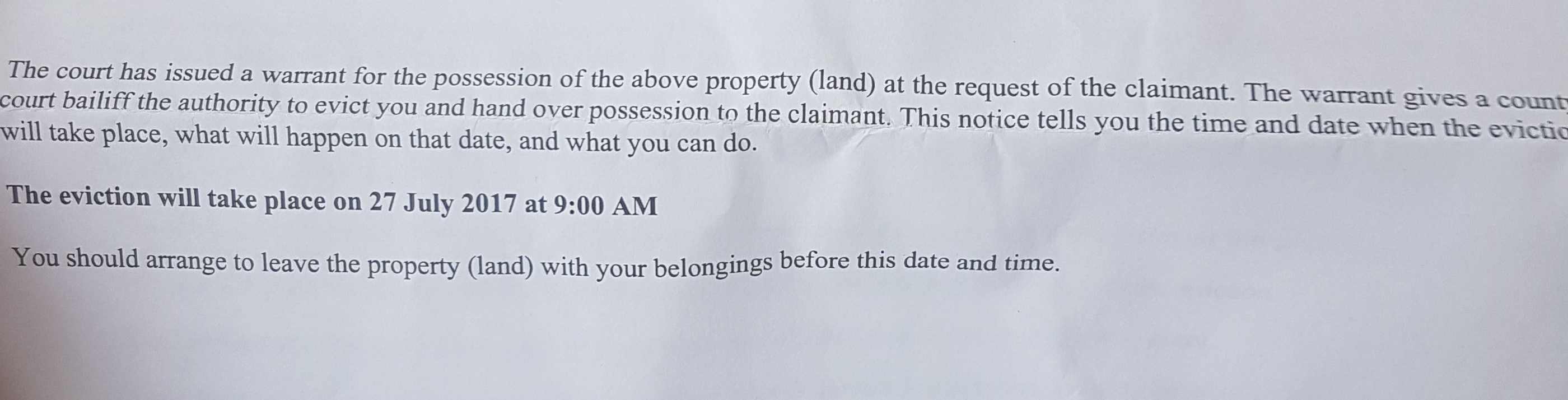
Regular readers will know I’ve been writing about Chantelle Dean, a 32-year-old woman who is about to be evicted from her private-sector rented flat in Newham.

Chantelle’s landlord wants the flat back, so Chantelle must leave. She’s just received her final eviction notice. The bailiffs will be round to throw her out on 27 July. Newham council won’t help Chantelle with emergency housing until that day:


Two points to put to you today:

1) Sending Chantelle to live out of London makes absolutely no sense – unless the aim is simply to get poor people out of rich people’s faces 

Chantelle has good reasons for wanting to find another flat in London. She has a three-year-old son who starts school in September. She receives Income Support at the moment. She wants to give herself the best chance to find work and training when her son starts school. Chantelle’s mother lives in Newham and can look after Chantelle’s son for free. Still, the council has told Chantelle to look for flats out of London (you can read email exchanges on that subject here). That’s because Chantelle will struggle to pay the inevitable shortfall between her housing benefit entitlement and expensive Newham rents.

So.

I’ve said it before and I’ll say it again: moving mothers with young children to places where they’re a long way from work and free childcare is a very sinister move.

The concept is a cruel nonsense by definition. If you send people who have no money away to live in areas where there is less work and no family nearby for free childcare, you cut people off from opportunities as a matter of course and they disappear. No doubt that’s the idea – Out Of Sight, Out Of Mind and all of that. Continue reading

How can the DWP STILL leave people to “live” on a pittance? Will any of this ever change?

Let’s start the week with a rant:

I’ve said this a million times, as has everyone, but let’s say it again:

Some people don’t have enough money to live on. Nothing is changing that I can see.

People are deliberately kept in debt to the state and in crushing poverty as a result. The DWP sanctions and reduces benefit money to the point where people can’t meet basic bills, and then deducts even more for loans and that people can’t pay. People are forced to cough up fines and costs for court appearances for unpaid council tax and rent – bills that they couldn’t afford to pay in the first place. That’s why they’re in court. Something needs to be done, but it isn’t being done. I wonder exactly how long the turning-point will sit on the horizon. How long will people be forced to wait for change?

We’ve had plenty of chat recently in the MSM re: politicians accepting that austerity is terrible and that people loathe it. I’m all for that chat, but a timeline for actual improvement would be good. I realise that we’ve had major political movement in recent times, from Brexit to the Christ-ly rise of Jez, and I try to get/stay enthused/interested, but the truth is that useful results on the ground still feel a very long way away.

I still speak to people who didn’t vote in the general election. They still shrug and say, “it doesn’t make any difference.” You see their point. They’re still at foodbanks. They’re still fighting the DWP for a few quid in hardship funds. They’re still written off as scroungers. Recent political events haven’t meant much in real terms for them.

After squandering months on an election and its aftermath, our “leadership” and parliament will soon take summer break. I wonder if a break should be allowed. Then again – who cares. What’s a couple of months in the greater scheme. Even if Jez launches the glorious revolution tomorrow, it’ll take years – decades – to rebuild public services to the point where people who really need those services get them in a way that feels helpful. A revolution would look great on facebook, but I wouldn’t hold my breath for the rest. I realise that I take a childishly simple view of political realities here, but I feel the need to get down to basics. A lot of people have been waiting an awful long time for the aforementioned turning-point to really arrive. Quite a few people have died along the way.

Some specifics from real life out and about:

There are three key problems I hear again and again from people as I go from foodbanks to lunch kitchens to meetings with people who have housing problems:

1) The DWP, councils and housing associations are deducting money from people’s benefits by way of sanctions, loan repayments, council tax and fines, and rent arrears. The upshot is that people are left with a pittance to live on. It’s not uncommon to hear people talk about a figure of £50 a week and less. Doesn’t matter whether or not you think people deserve these slapdowns because they’re single mums, unemployed, low earners, ex-cons, or whatever. They’re stuck forever. The state and its offshoots crush people with debts that they’ll never repay. The state does not help these people. It owns them. We, or someone, needs concrete plans to change that.

2) People are waiting for an Employment and Support Allowance decision, or a Personal Independence Payment decision. The waiting is going on and on and/or their application is turned down. The mandatory reconsideration and tribunal appeals processes drag on and are extremely difficult to navigate if you can’t grasp complex government bureaucracies. Which many people can’t, because these systems are too hard to deal with even if you do feel up to it. At the moment, in one way or another, I’m dealing with/writing about three people with learning difficulties and health problems who have been found fit for work this year and have not been able to appeal these decisions, or sort out interim income, without help from local support groups.

3) People are fighting eviction and paying big court/bailiffs costs on the way. They’re always insecurely housed, because they must rent in the private sector.

Here are three very recent examples of these:

Continue reading

Here’s a woman explaining in detail problems she’s had getting council homelessness help. This system is garbage.

The aim of this post is to show you what it’s like when a person tries to get help from a council when that person is threatened with homelessness.

As you’ll know, there’s been a lot of discussion about the realities of these council systems after Grenfell.

I want to give you an idea of the shambolic and often startlingly unhelpful council bureaucracies that people must use when they need help to find a place to live. I want to show you the system as people who must use it see it. We live in an era of massively oversubscribed and under-resourced council homelessness offices (god knows I wouldn’t want to work as a frontline council homelessness officer these days). We also live in an era where big councils are very keen push poorer people out to live in cheaper areas, because housing benefit doesn’t cover private rents in expensive areas. These things show.

To the story, then. This is one person talking about the systems she’s experienced:

In the past few weeks, I’ve been talking with a 32-year-old Newham woman called Chantelle Dean. For much of this year, Chantelle has been threatened with eviction and homelessness. She tells a story that will be very familiar to anyone on this circuit.

Chantelle lives in a small, rickety, two-bedroom rented flat in Newham. Rodents and cockroaches are a problem, as they often are in houses in cramped, older rows. There are gaps in walls which rodents use as entry-points: “the [exterminator] guy said no matter how much foam they put in, the mice are going to be coming through. It’s so old and there are so many holes,” Chantelle said. I’ve posted photos of the anti-mouse plastic foam the exterminator sprayed into wall-holes below.

Chantelle has a three-year-old son. She was placed in her flat about three years ago by Newham council after working her way through family problems and contact with social services. Chantelle receives Income Support. She plans to find work when her son starts nursery in September. She said she’s applied for jobs. Her mother lives nearby and can provide free childcare. That’s the plan.

Unfortunately, the plan is threatened by Chantelle’s precarious housing situation.

Chantelle is about to be evicted from her flat. As of Friday last week when we met at her flat, she still had nowhere to go when eviction day comes. She’d been trying to sort the problem out for months. (Chantelle managed to get another meeting with the council this week, so I’ll update this post if there’s progress to report).

The trouble began at the start of this year when Chantelle’s landlord gave her a notice to tell her that she had to leave the property (a section 21 notice, I think. I don’t mind saying the paperwork that comes with these things confuses me as well). She had to leave the flat by March.

She was very upset about this, as well she might be.

Chantelle went to the Newham Council Housing Needs office in East Ham in January to tell the council about the notice and to ask for help find another flat in the area. This is where things began to get messy, as they do.

Chantelle said the council told her that the council couldn’t help until the day that she was actually evicted from the flat – when the bailiffs turned up at her door, as she understood it. She said she was advised to stay in the flat and to wait to receive a possession order – which, I gather, is the next stage in the so-called system (the possession order is mentioned in the officer email below). This was, needless to say, of concern. Chantelle wanted help as soon as possible. She wasn’t keen to wait until bailiffs hammered at the door. She was also worried that she’d end up with court fines and costs if things went as far as possession orders and bailiffs (this is exactly what happened, as you’ll see).

She said that getting anyone to listen was extremely difficult. Noting this frustration is important. People constantly report this sort of frustration with frontline services:

“All they [the council] repeat is that, “we’re not going to help you until you get the bailiff’s warrant.” Once you get that, you come back up here [to the East Ham housing office] and give it to her, my caseworker, and then she will give me an appointment at [Newham Council’s] Bridge House on the day when the letter says that the bailiffs will come. Anything from that – they don’t want to talk to you. They don’t want to see you. Anything.”

Continue reading

DHPs are a stopgap. They don’t fix the real housing problems. The whole system is wrecked

A few thoughts on the government’s disingenuous guidance to *help* Grenfell residents with housing costs by providing Discretionary Housing Payments (DHPs):

On Friday morning on twitter, some of us were discussing this DWP memo on getting DHPs to Grenfell residents. (This was hours before the Guardian finally picked up on the memo and ran a let’s-brown-nose-the-government-by-putting-the-government-defence-up-front story on it. That story didn’t offer an interview with anyone who had actually gone through the often-invasive and thankless process of applying for a DHP. Don’t start me on that. I’m not in the mood).

Anyway.

The memo told councils to prioritise Grenfell residents who applied for Discretionary Housing Payments for help with rent in advance, deposits on new homes and rent shortfalls in new homes. This memo made me furious, for many reasons.

One is, of course, that people who survived the Grenfell fire should not have to apply for anything at all, through any of these council processes. Deposits and full rents should be paid on the homes of their choice for the rest of their lives. I genuinely think that. I can’t see why people wouldn’t think that.

Another reason for disliking this government memo “initiative” is that DHPs are only stopgap payments. They are short-term payments made by councils from a government allocation. They are used to cover housing-cost problems for people on housing benefit, or the housing component of Universal Credit – say, a rent deposit for a flat for someone on a low income, or the bedroom tax, or a shortfall between the amount of housing benefit people can get and their full rent, particularly when people must rent in the expensive private sector. (I’ve helped people apply for DHPs).

DHPs do NOT change the welfare reform policies and issues that cause the problems in the first place – the bedroom tax, local housing allowance caps, benefit caps, the fact that homeless people must be placed in the expensive private rental sector because there’s not enough social housing to go around, and the fact that everyone who rents privately is exposed to runaway private-sector rents. Those problems go on – seemingly forever, at the moment. They’re not changed by DHP allocations. The DWP memo on DHPs made clear Grenfell people remain subject to welfare reforms such as the benefit cap.

It’s the short-termism of DHP help that really gets my back up. Covering payments and problems such as deposit and rent shortfalls with DHPs is a real get-out for government and councils. It means that the government via councils can use DHPs to mask housing and rent problems caused by the high rents, the discharging of homelessness duties into the private sector and welfare reform for six months, or a year, or, to put it crassly in this case, until mainstream press attention moves away from Grenfell and people are left alone to battle council and DWP bureaucracies. DHPs don’t address reasons for a housing crisis at all.

There’s another problem, too – one that isn’t discussed as often as it should be. People (I mean a lot of the mainstream media here) seem to assume that the bureaucratic systems that people must use to apply for DHPs, housing, housing benefit and the UC housing component function reasonably well, or even at all – ie, that there’s an operational system in place for people who are homeless and/or who need housing benefit and DHPs and so on. The truth is that these systems are in absolute shambles. I realise that government says rules should be relaxed for Grenfell residents and every effort made to assist people. I’m saying that I have no confidence in this being the case in an ongoing way. That’s because wherever you go in the country, things are so often an unbelievable mess. I can’t tell you how often I’ve gone to housing meetings, or jobcentre meetings, or whatever, with people, and come out with nothing resolved. This needs to be addressed in councils and bureaucracies all over. These problems apply all round.

Continue reading

You don’t end austerity simply by announcing it’s over. You have to undo the damage that’s been done

I’ve been thinking about these suggestions that new government or leadership (whatever any of that is now) will take another look at austerity and public sector cuts, because worthies have suddenly discovered how much people dislike austerity.

A few of those thoughts:

Yesterday, I went to the South Chadderton foodbank to talk for a few hours with people who came in for food parcels.

I spoke to Emma, 31, Theresa, 50 and one bloke who’d lost his job as a cleaner after an accident and still had all his kids living with him at home.

Emma had two very young children living with her – a boy of five and a baby of six months. She’d had her benefits cut for missing a so-called “workforce meeting” that she hadn’t known about. She also had all sorts of problems with child tax credit – the HMRC was demanding several thousand pounds which it claimed she’d been overpaid back in the day. A lot of money was being deducted from her benefits – for a social fund loan that she thought should be paid off by now and other repayments and totals which she did not think made sense. She said that she was trying to live on about £105 a fortnight. That was with two little kids. Things were going about as well for Emma as you’d expect.

Theresa was in recovery and living on nothing while she waited to see if she could win an appeal against an ESA fit-for-work decision.

I took longer interview recordings with everyone I spoke to, so will post those as an update when I’ve transcribed them.

Point for now is that all these problems still rage on. I am hardly convinced that a government in chaos will undo them. I’m not convinced any government will ever undo them, if I’m honest. I don’t think a lot of people know how badly the public sector has been hit. Frontline services everywhere are in tatters. A lot of the time, you can’t even get through on the phone to council or DWP officers to ask for help with a problem or a claim. If you do get through, often as not they’ve got nothing to help with.

I know a great many people who’ve been clobbered on myriad fronts – endless ESA fit for work assessments, PIP applications which go nowhere, the bedroom tax, problems with tax credits, sanctions, council tax debts, court debts for evictions, the benefit cap and god knows what else. I am of course delighted (ha) to hear the likes of Michael Gove deliver the world of pearlers such as “we also need to take account of legitimate public concerns about ensuring that we properly fund public services,” but honest to god and really. They’ve decimated public services already. They really have. I’ve been writing about this destruction for years now, so I’ve had a good look at the mess. Where would you even start?

We consider you housed, because you have a grotty caravan to live in. This is austerity.

This one goes out to all those politicians who seem only newly acquainted with the notion that austerity is rotten and ridiculous, and that people are very sick of public sector cuts:

I’m posting here yet another story from a frontline homelessness office which will tell you something about hopelessly stretched housing resources in austerity. It will also tell you something about the farcical conversations that homeless people and housing officers must have during austerity – ie, at a time when all sense of proportion has left the building.

In the discussion reported below, a housing officer at First Choice Homes in Oldham (First Choice provides the homelessness service for Oldham Council) told the 67-year-old man called Paul who I was with that Paul was considered adequately housed because he had a crappy old caravan to live in on a site in Oldham. Take that.

Image: in the caravan

This conversation took place in the last week of April. A month or two before that, Paul had been offered sheltered accommodation, I think it was, but he was too concerned about the spectre of escalating service charges in sheltered accommodation to go with that. Nothing is easy in austerity. Every option has a sting in the tail and/or one on the horizon. The idea of service charges – in sheltered accommodation, or anywhere – scares the shit out of people generally. Nobody ever knows how big service charges will get. Certainly, nobody believes the sky will be the limit when it comes to service charges going up. The mere mention of service charges is enough to put people off further dialogue.

As we talked about sheltered accommodation, the officer agreed that service charges were a thing: “we pass that [court manager] charge onto the customer, because it’s the customers that are in need of that service…maintenance charges, we charge those to all our customers…. communal areas,” etc, etc.

That being the case, the caravan was it.

“The advice that you got… is that you were able to return to your caravan, so you’re not homeless… that’s why they’re not giving you the homeless priority,” the officer said to Paul. So, there we were – an older bloke with a heart condition being told that living in a caravan was acceptable. We knew that this line was ridiculous. The officer, to her credit, knew this line was ridiculous too, but there we were all the same, going down together. Again. God knows how many similar conversations I’ve witnessed in the last few years. Austerity has redefined our notions of “acceptable,” and “logical.” You hardly know what you’ll hear next.

Continue reading