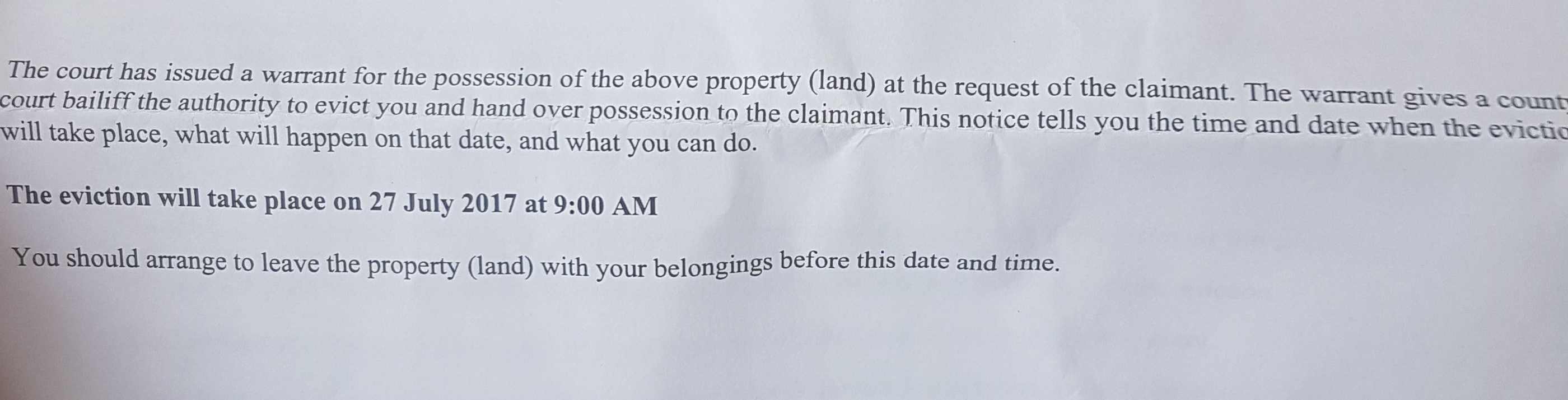
DHPs are a stopgap. They don’t fix the real housing problems. The whole system is wrecked

A few thoughts on the government’s disingenuous guidance to *help* Grenfell residents with housing costs by providing Discretionary Housing Payments (DHPs):

On Friday morning on twitter, some of us were discussing this DWP memo on getting DHPs to Grenfell residents. (This was hours before the Guardian finally picked up on the memo and ran a let’s-brown-nose-the-government-by-putting-the-government-defence-up-front story on it. That story didn’t offer an interview with anyone who had actually gone through the often-invasive and thankless process of applying for a DHP. Don’t start me on that. I’m not in the mood).

Anyway.

The memo told councils to prioritise Grenfell residents who applied for Discretionary Housing Payments for help with rent in advance, deposits on new homes and rent shortfalls in new homes. This memo made me furious, for many reasons.

One is, of course, that people who survived the Grenfell fire should not have to apply for anything at all, through any of these council processes. Deposits and full rents should be paid on the homes of their choice for the rest of their lives. I genuinely think that. I can’t see why people wouldn’t think that.

Another reason for disliking this government memo “initiative” is that DHPs are only stopgap payments. They are short-term payments made by councils from a government allocation. They are used to cover housing-cost problems for people on housing benefit, or the housing component of Universal Credit – say, a rent deposit for a flat for someone on a low income, or the bedroom tax, or a shortfall between the amount of housing benefit people can get and their full rent, particularly when people must rent in the expensive private sector. (I’ve helped people apply for DHPs).

DHPs do NOT change the welfare reform policies and issues that cause the problems in the first place – the bedroom tax, local housing allowance caps, benefit caps, the fact that homeless people must be placed in the expensive private rental sector because there’s not enough social housing to go around, and the fact that everyone who rents privately is exposed to runaway private-sector rents. Those problems go on – seemingly forever, at the moment. They’re not changed by DHP allocations. The DWP memo on DHPs made clear Grenfell people remain subject to welfare reforms such as the benefit cap.

It’s the short-termism of DHP help that really gets my back up. Covering payments and problems such as deposit and rent shortfalls with DHPs is a real get-out for government and councils. It means that the government via councils can use DHPs to mask housing and rent problems caused by the high rents, the discharging of homelessness duties into the private sector and welfare reform for six months, or a year, or, to put it crassly in this case, until mainstream press attention moves away from Grenfell and people are left alone to battle council and DWP bureaucracies. DHPs don’t address reasons for a housing crisis at all.

There’s another problem, too – one that isn’t discussed as often as it should be. People (I mean a lot of the mainstream media here) seem to assume that the bureaucratic systems that people must use to apply for DHPs, housing, housing benefit and the UC housing component function reasonably well, or even at all – ie, that there’s an operational system in place for people who are homeless and/or who need housing benefit and DHPs and so on. The truth is that these systems are in absolute shambles. I realise that government says rules should be relaxed for Grenfell residents and every effort made to assist people. I’m saying that I have no confidence in this being the case in an ongoing way. That’s because wherever you go in the country, things are so often an unbelievable mess. I can’t tell you how often I’ve gone to housing meetings, or jobcentre meetings, or whatever, with people, and come out with nothing resolved. This needs to be addressed in councils and bureaucracies all over. These problems apply all round.

Continue reading

We consider you housed, because you have a grotty caravan to live in. This is austerity.

This one goes out to all those politicians who seem only newly acquainted with the notion that austerity is rotten and ridiculous, and that people are very sick of public sector cuts:

I’m posting here yet another story from a frontline homelessness office which will tell you something about hopelessly stretched housing resources in austerity. It will also tell you something about the farcical conversations that homeless people and housing officers must have during austerity – ie, at a time when all sense of proportion has left the building.

In the discussion reported below, a housing officer at First Choice Homes in Oldham (First Choice provides the homelessness service for Oldham Council) told the 67-year-old man called Paul who I was with that Paul was considered adequately housed because he had a crappy old caravan to live in on a site in Oldham. Take that.

Image: in the caravan

This conversation took place in the last week of April. A month or two before that, Paul had been offered sheltered accommodation, I think it was, but he was too concerned about the spectre of escalating service charges in sheltered accommodation to go with that. Nothing is easy in austerity. Every option has a sting in the tail and/or one on the horizon. The idea of service charges – in sheltered accommodation, or anywhere – scares the shit out of people generally. Nobody ever knows how big service charges will get. Certainly, nobody believes the sky will be the limit when it comes to service charges going up. The mere mention of service charges is enough to put people off further dialogue.

As we talked about sheltered accommodation, the officer agreed that service charges were a thing: “we pass that [court manager] charge onto the customer, because it’s the customers that are in need of that service…maintenance charges, we charge those to all our customers…. communal areas,” etc, etc.

That being the case, the caravan was it.

“The advice that you got… is that you were able to return to your caravan, so you’re not homeless… that’s why they’re not giving you the homeless priority,” the officer said to Paul. So, there we were – an older bloke with a heart condition being told that living in a caravan was acceptable. We knew that this line was ridiculous. The officer, to her credit, knew this line was ridiculous too, but there we were all the same, going down together. Again. God knows how many similar conversations I’ve witnessed in the last few years. Austerity has redefined our notions of “acceptable,” and “logical.” You hardly know what you’ll hear next.

Continue reading

Can real problems like homelessness get more than fleeting attention these days?

Let’s start this one with a story from the large collection in my Nobody Gives A Stuff If Women And Children Are Homeless file:

Image: dead mouse in the bathroom

I’m talking at the moment with a young Newham woman called Chantelle. For some time now, Chantelle has been living in a private-rental craphole. She has a three-year-old son. Cockroaches and rodents roam around their rotten flat. Chantelle told me that exterminators have visited a couple of times, but that they may as well have saved themselves the trip. The roaches and rodents have always come charging back. Wonder if they’re galloping in through a hole in a wall somewhere. Chantelle took some pictures of the roaches, which I’ve posted above and below.

Image: dead cockroaches in the flat

A couple of months back, Chantelle’s landlord told her that she had to leave the flat. Chantelle says that she doesn’t have rent arrears and hasn’t damaged the flat. Her landlord just wants the place back. Sometimes, landlords want to charge somebody else even more to live (should I say “live”) in a flat. Who can really say.

Chantelle went to Newham Council to explain her troubles and to ask for help. You can guess how fulfilling that visit was. Chantelle would’ve been better off waiting for December and writing Santa for a tent. The council was supremely unhelpful as councils can be these days. It hardly matters where you go. Frontline officers have no resources, which means they have no answers. You hit a gatekeeper as soon as you arrive at reception, or send an email, or make a call, or whatever. The opening line is often Goodbye. Some put this more politely than others, but that’s the essence. I’ve seen emails from the council which demonstrate that was the essence here. Chantelle was advised to look for cheap places out of London. People don’t know how to fight for more.

At the very least, councils give people instructions that they find almost impossible to follow. Chantelle says Newham told her that she couldn’t, or wouldn’t, be helped as a homeless person until she was actually evicted, or the bailiffs were at her door to evict her, or her notice expired, or something to that effect. She still wasn’t entirely sure when we talked and anyway: technicalities. The technicalities mean little to people when it comes down to it. Everyone still ends up at the same place – ie, nowhere. The long and the short of it was that as far as Chantelle was concerned, she was told to wait, to try and find herself another flat out of London (she has no chance of that now in London’s private rental sector, which she can’t afford) and to only come back to the council when the bailiffs were racing up the road after her, or something along those lines. I’d ask Newham council to clarify the situation, except that Newham council has refused to talk to me for several years on account of my Focus E15 housing campaign stories and general attitude to press offices and life, etc. Those guys can really drag out a grudge.

Chantelle’s understanding was that if she left the flat before she was thrown out of it, the council would say that she’d made herself intentionally homeless. This is the kind of understanding that a lot of people are left with these days. I went recently to First Choice Homes in Oldham with a 67-year-old bloke called Paul who was told while we stood there that he was considered to be adequately housed because he had a tiny, rotting caravan to live in. He was also told that he would make himself intentionally homeless if he left the caravan voluntarily – ie, without being chucked out of it by whoever owned it and/or the campsite. True story.

Continue reading

You can’t apply as homeless without an address. What.

This week’s bureaucratic classic:

Yesterday, I was in First Choice Homes in Oldham with Paul, 67, who is homeless. He lives in a caravan at the moment (see pictures below). Joy.

Paul had to make a change to his homelessness and housing register application/record (they’re both on the same form, we were told). He needed to add medical information, because he had a new letter about his health from his doctor. He had to do this online as you must do most things these days. We were ushered over to First Choice’s computer bank as soon as we mentioned the change of circumstances at reception.

So.

Not long into the computer session, we hit a screen which demanded Paul’s address (again). There was, of course, a big and very immediate problem with this. Paul doesn’t have an address BECAUSE HE IS HOMELESS (he wasn’t able to fill in the House Type field either, given that there was no Caravan option in the menu). An address field on a homelessness form would surely be an optional extra in his case – and for the many people I meet who sleep rough, or sofa-surf all over the place, or whatever.  But no. The form would not submit unless the address fields were filled. This is the point where you have to cast about for any old shit that might work in the form fields – maybe a friend or relative’s address, or an older address if you have one. That hardly reflects your situation, though. It doesn’t give you much confidence in the process, either, given that the process doesn’t give accurate insight into your situation.

SIGH. Here’s a shot of the screen not working. It’s fuzzy, but you get the idea. The red fields and exclamation marks are as usual:

I can’t tell you how often my head is done in by public service applications and screens these days. There really does not seem to be a single benefit or housing application process which doesn’t involve a major hurdle or nine. Phone calls to the DWP and councils take ages/go nowhere. Online forms don’t work, or they demand information people can’t easily give. Some processes look and feel as though they were built in technology’s dark ages.

You can set aside a whole morning or afternoon to make calls, or fill in forms these days and get absolutely nowhere (I’ve set aside two afternoons this week for such calls and forms, and emerged no further ahead on both occasions). You inevitably conclude that all aspects of the system are designed to put people off applying. Certainly, very little seems to be designed with the real-life needs of real service users in mind. Can’t wait to see how much further things deteriorate as more and more public money is diverted into endless Brexit departments and projects. Out in the real world, this is how life goes. Continue reading

“Towards Work” activities to get a DHP and stayed housed. How big is conditionality going to get?

Throwing this one out there for your inspection:

Recently, I came across strict, new-ish Derby City Council conditionality rules for people who apply for Discretionary Housing Payments, Council Tax hardship payments and Local Assistance help.

Those rules are here.

For those who don’t know the territory: Discretionary Housing Payments are short-term payments to help people cover housing-cost problems such as rent shortfalls. Local Assistance Schemes buy items like furniture and fridges when people can’t afford them. Council tax hardship payments are, obviously, for people who struggle to meet council tax bills after council tax support.

Since November 2016 in Derby, this help has come with hefty conditions for some applicants. Of course – it is not unusual for councils to ask people to engage in an activity such as debt advice in exchange for a DHP, etc. That’s happened for ages. The Derby list sets out more hoops to jump through. That’s why I’m posting it. I found it while I was searching for help generally for a single mum. Other councils may have similar. No doubt more and more will as time goes on and more funding is cut.

You’ll see from this page that people who apply for DHPs, Council Tax help and Local Welfare Assistance and fall into certain categories: “must be willing to take up and remain engaged with appropriate support recommended by the council.”

This “support” may include:

– money advice
– budgeting support
– access to banking products
– access to digital skills support
– access to job clubs
– training and housing advice

Failure to participate could mean you get and/or keep nothing:

“If you do not engage with your support programme, any award that you receive from the Single Discretionary Award Scheme may be at risk.”

“Towards work” requirements are among the conditions as you can see.

So.

You may think this is all perfectly fair.

I do not.

This is the kind of list which gets on my nerves very badly. It smacks to me of gatekeeping and of the state’s ever-tightening grip on people who are in extreme financial hardship. Conditions for receiving benefits and hardship help become more and more invasive and exacting, as anyone who signs on for JSA or Universal Credit will tell you. Anyone who requests state help these days automatically loses all right to autonomy. Continue reading

More recordings: intentionally homeless if you’re evicted for benefit cap rent arrears…?

More food for thought from conversations about the benefit cap at the actual coal face:

I’ve posted below a recording in which a Basildon council officer says that people who are evicted because of benefit cap rent arrears could be found to have made themselves intentionally homeless.

Which was not the best news. Council help for you is very much reduced if you’re judged responsible for your homelessness. You’re more or less on your own with your homelessness problems if that happens as I’ve seen it. You would have thought that people evicted on account of rent arrears caused by the benefit cap should and would be cut slack in this area – particularly if they were placed in housing that they could afford before the benefit cap was lowered – but maybe not.

Certainly, officers make interesting remarks on the ground. It’s all important to note:

The recording below was made at a February meeting with a woman who has serious rent arrears because of the recently-lowered benefit cap. The woman and her three young children were placed in a Basildon flat by Newham council. Basildon council handles the family’s housing benefit claim. This woman’s housing benefit was cut by about £100 a week when the cap was lowered at the end of last year. A small discretionary housing payment covers part of her rent shortfall until the end of March. We went to Basildon council to ask what else she could do.

The officer said the woman should go back to Newham council to ask if Newham thought her flat was still affordable now that her housing benefit had been cut.

The officer then said intentional homelessness was on the cards if this woman was evicted because of benefit cap arrears:

(This audio has been altered to disguise voices. Am not particularly in pursuit of individual officers here. It’s the message that’s the issue).

“If you become homeless, it could be that you’d be seen as intentionally homeless anyway, because you… if you’ve been evicted for rent arrears, then it is through non-payment of rent that you’ve lost your property.

That got my attention, all right. In the recording, you hear me ask:

“Would that mean no one would have a duty to house her? Is that the case, even when [the rent arrears have been caused by] something like that [benefit] cap that’s come in subsequently….?”

“This is why you need to see Newham council about the affordability, because if they say it is affordable, then you’re going to have to struggle by and get it paid…” the officer said. “If they don’t think it’s affordable, then because they have a duty, they have a duty to assist you to find something cheaper, or…”

Or what? I thought.

I contacted Newham council to ask whether or not the council was likely to decide that people had made themselves homeless intentionally if they were evicted because of rent arrears caused by the benefit cap. Unfortunately, the council did not respond. Think I must still be on their blacklist (we apparently fell out over my Focus E15 stories. Do they hold a grudge or what). If anyone else can get an answer out of them, by all means let me know. It would be good to have that peg in the ground for future reference.

Anyway. Official positions don’t always matter when you get down to it. This is the sort of thing you hear on the ground. Putting it all out there.

Many thanks to @nearlylegal for help with benefit cap questions over the past while.

The very personal information you must give in public if you need state help

A short post on the state and petty humiliations:

Posted below is a list of questions taken from a recorded conversation between a woman affected by the recently-lowered benefit cap and a Basildon council housing options officer last week.

This woman is already in significant rent arrears because of the lowered cap. She went to Basildon council to ask what would happen if she couldn’t pay the arrears (the answers, which you probably can guess already, are at the end of this post). I went with her.

Basildon has an open-plan public services hub: council services, the library and the jobcentre all in one enormous ground-floor room. Security guards roam the place. You take a ticket and wait for your number to come up on a computer screen.

“There’s no privacy,” the woman I was with said when we got there.

She was right. There wasn’t. There were a few private rooms off to the side here and there, but you weren’t invited to use one. There were open cubicles all over the place across the floor. You could hear absolutely everything that was going on in the ones around you. At one point, we sat next to a guy who was explaining to an officer why he was struggling to pay his council tax. We might as well have been attending his appointment with him. We could hear every single word that he said. Continue reading

Look at the state of this flat. Here is independence vs neglect in austerity

These recent photos show the mould and mess in a one-room Haringey flat that is occupied by a man his mid-50s (I’m withholding his real name in this story).

This man has learning difficulties. He also has diabetes, which he struggles to manage, and is in poor health. These photos were sent to me recently. I visited this flat a number of times a while back and have known this guy for several years. His living conditions are usually atrocious.

He is about to be evicted from this flat, because it is in such an appalling state. He received a court notice last Thursday. He brought the notice in to show members of the Kilburn Unemployed Workers’ Group at their Thursday afternoon meeting (he also had other photos of the mould in the flat, which he showed us).

Some history:

This man lived with his mother until she died over a decade ago. While his mother was alive, he always had work as a general and kitchen assistant in hotels and kitchens.

This man was made redundant from his last job about nine years ago. He signed on for jobseekers’ allowance and has been put through the DWP’s usual Work Choice/Work Programme mill, with no results whatsoever. He has not found work again. His health has deteriorated to the point where he needs to apply for Employment and Support Allowance. Members of the Kilburn group are helping him with his forms.

Since his mother died, housing has been a major challenge for this man.

So.

There are two main problems for people in this sort of situation.

The first is accommodation itself – finding places in the private sector which people can afford to rent when they rely primarily on housing benefit. Continue reading

Benefit cap arrears and eviction threats for women and children. Already.

Another short post on impossible situations:

Here’s a rent arrears demand recently received by a woman who lives in a Basildon flat with her three young children (the arrears have increased since she received this letter).

It appears these arrears have come about because of the recently-lowered benefit cap.

This woman’s benefits exceeded the Out of Greater London limit of £384.62 by about £100 a week. As a result, at the end of last year, her housing benefit was cut by about £100 a week from about £188 a week to to £87 a week (think the sums are correct, looking at the paperwork. Give me a shout if you think the totals need looking at. Maths problems with these things are not at all uncommon).

Basildon council recently gave this woman a discretionary housing payment of £20 a week to cover some of the rent shortfall. That helps a bit, but only a bit. She only gets the DHP for the short term, too. After that, she either finds the full whack each week, or moves house again (this time with a serious arrears history) and takes the kids out of school again (she was recently in temporary accommodation in another borough)… or she ultimately gets evicted, I guess:

“I don’t know what to do,” she says.

I don’t really know what to do either, if I’m honest. Which is not particularly helpful.

What I do know is that I spend an awful lot of time these days with people in different parts of the country who show me demands for rent money they can’t pay and/or which say court and eviction are on the cards. As I write this, an email about a looming eviction in Haringey has landed in my inbox. I go to foodbanks and foodbank-lunches and inevitably end up talking to at least one person who is clutching a folder of letters about rent arrears.

Continue reading

Councils, housing associations and the DWP are crushing people with debt

While Brexit and Trump hoover resources and headlines, the state and so-called social landlords continue to get away with screwing people into the ground:

Last week, I spent several hours at the South Chadderton foodbank in Oldham speaking with people who’d come in for groceries.

We talked about the reasons why people needed to use the foodbank.

One explanation in particular came up, as it does a lot: Debt repayment plans are leaving people with no money.

People on benefits and low incomes are repaying arrears or loans money to councils, housing associations, the DWP, bailiffs and god knows who else – but they can’t afford it. The loss of the fivers and tenners that authorities deduct in repayments make a tolerable life impossible. People certainly don’t have the hundreds, or sometimes thousands, of pounds that are really needed to shift these debts. Simple equation, when you look at it. Debts grow and penalties grow, but income does not.

Still, we have these repayment plans.

At South Chadderton, I talked for a long while with a young guy called Neil (name changed. There’s a transcript from the interview we recorded at the end of this post).

Neil needed a food parcel, because Oldham’s First Choice Homes housing association and the DWP were taking cuts from Neil’s benefit for rent arrears and loan repayments. Other authorities were queuing up for a share: Neil had been summonsed to court for council tax arrears. Neil couldn’t afford the repayments, but he had to pay all the same. You’ll see from the letter above that First Choice Homes is taking £30 a fortnight for rent arrears (out of a benefit total of about £130).

Neil said that talking to the housing association was hopeless (I offered to make a call).

“They say the lowest they can go is £30…they’re on the phone, going on with themselves.. I said, “hang on a minute.” They said, “can you make a payment now?” I said, “I’ve got nothing to give you.” (I’ve had plenty of similar conversations where I’ve tried, fruitlessly, to convince organisations to go easy because people can’t meet their debts).

It should come as no surprise that Neil was recently done for theft. He did a stretch last year for theft by finding – “[it was] a load of slates in the alley. They’d been there for two year.” This sort of story is very common indeed. I’ve met a number of guys in the area now who’ve been in and out of jail in recent times. (Two out of the three people I spoke to at the foodbank last week had done time).

The problem is life when people get out. Neil lost his housing benefit while he was in prison. He ended up with rent arrears. That total has gone up again, because he didn’t make repayments over Christmas and New Year. Neil decided to keep hold of his benefit money instead. Might as well be hung for a sheep as a lamb, etc. I’d take the same view myself. Neil couldn’t stand another call with the council or the housing association on the topic. I find this all the time these days as well. Every contact with the bureaucracy is a bitter fight. People don’t even want to talk to an officer to ask if calculation mistakes have been made, or to question sums they don’t understand, or if letters are correct, or if there are other options for help.

Continue reading