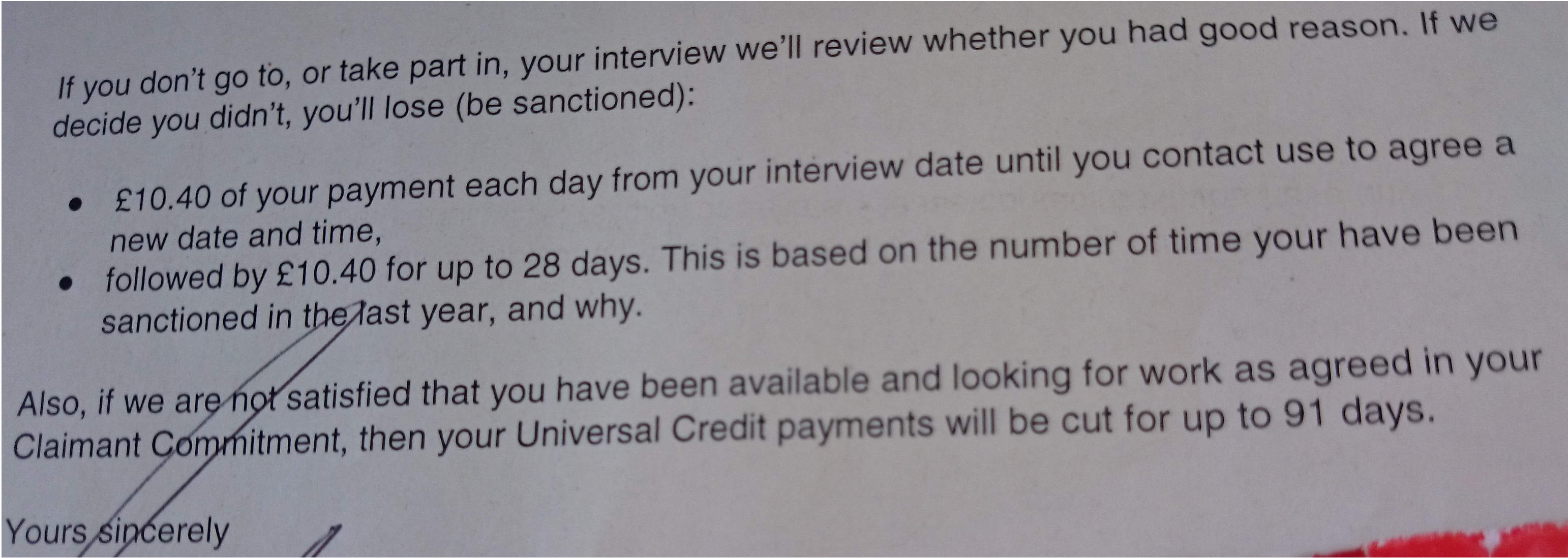
This is the sort of story that really gets my back up – it’s a story about the state looking to catch benefit claimants out and making sure to utilise every one of the petty ways open to it to do this. Why aren’t bailed-out bankers hauled out for the sort of probing described below?
A few days ago, I spoke again to this young woman. She is 22 years old and has a four-year-old daughter. She’s been trying to sort out her Universal Credit claim for ages.
She told me about an argument she’d had at a London jobcentre she’d recently signed on with. It’s the sort of story I hear a lot – it’s about a jobcentre adviser and a benefits claimant arguing the toss over a small expenditure that appeared on a bank statement. This story may not sound like a big deal to some, but it is. I think that this nit-picky reading of bank statements by officials is one reason why people don’t apply for state help to which they may well be entitled.
So.
At one of this young woman’s jobcentre meetings, a jobcentre adviser who was reading through the young woman’s bank statements happened upon a small payment to a fast food establishment. This immediately turned into a drama – doubtless heard by many the jobcentre, given the total lack of privacy in these places. The adviser demanded to know how and why the young woman was spending money on burgers and blah blah blah.
The young woman told me that a friend gave her some of the money afterwards to pay for the food, but that they had used her card at the time, because the friend didn’t have the cash with her to pay then and there. It was the sort of on-the-spot arrangement that takes place between friends around the world about a million times an hour, etc. Or should I say – it was the sort of on-the-spot arrangement that some people are permitted to make and others are not. Those who earn their “own” money are allowed to make those sorts of agreements with friends. People who receive benefits are not. They must make sure that they are in a position to justify every penny and know that they will be dealt to if they can’t, or if some official somewhere doesn’t like their explanation, etc. A bank statement does not, of course, offer any sort of back story. It simply lists financial transactions. The jobcentre adviser in this case assumed, of course, that the young woman was lying when she said somebody else paid towards the food. The subtext was and always is, of course, that the young woman was a) wildly irresponsible financially, b) a pisstaking benefits claimant and c) flush with cash.